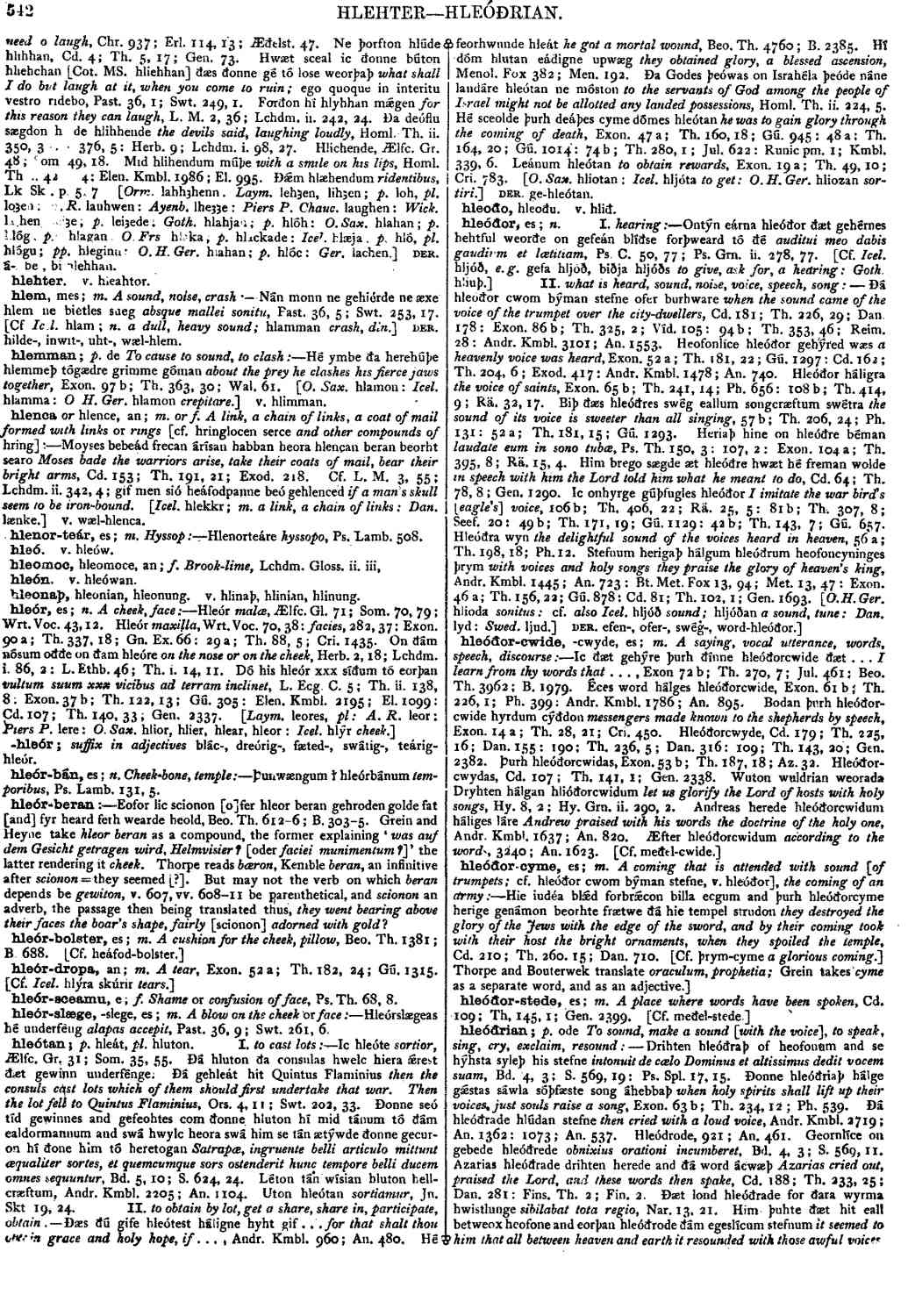
hleóðrian
- verb [ weak ]
-
— Drihten hleóðraþ of heofonum and se hýhsta syleþ his stefne
intonuit de cælo Dominus et altissimus dedit vocem suam,
- Bd. 4, 3;
- S. 569, 19:
- Ps. Spl. 17, 15.
-
Ðonne hleóðriaþ hálge gǽstas sáwla sóþfæste song áhebbaþ
when holy spirits shall lift up their voices, just souls raise a song,
- Exon. 63 b;
- Th. 234, 12;
- Ph. 539.
-
Ðá hleóðrade hlúdan stefne
then cried with a loud voice,
- Andr. Kmbl. 2719;
- An. 1362: 1073;
- An. 537. Hleódrode, 921;
- An. 461.
-
Geornlíce on gebede hleóðrede
obnixius orationi incumberet,
- Bd. 4, 3;
- S. 569, 11.
-
Azarias hleóðrade drihten herede and ðá word ácwæþ
Azarias cried out, praised the Lord, and these words then spake,
- Cd. 188;
- Th. 233, 25;
- Dan. 281:
- Fins. Th. 2;
- Fin. 2.
-
Ðæt lond hleóðrade for ðara wyrma hwistlunge
sibilabat tota regio,
- Nar. 13, 21.
-
Him þuhte ðæt hit eall betwoex heofone and eorþan hleóðrode ðám egeslícum stefnum
it seemed to him that all between heaven and earth it resounded with those awful voices
- Guthl. 5;
- Gdwin. 36, 4.
-
Ic gehýrde ðæt hit hleóðrode
I heard that it [the cross] uttered a sound,
- Rood Kmbl. 52:
- Kr. 26.
-
Hit hleóðrode ðá swíðe tóward Haraldes
the general voice was very much in favour of Harold,
- Chr. 1036;
- Erl. 164, 28.
-
Hyre stefn oncwæþ word hleóðrade
her a voice addressed, a word was heard,
- Exon. 69 b;
- Th. 259, 17;
- Jul. 283:
- Andr. Kmbl. 2860. An. 1432.
-
Hé wæs ðæra worda wel gemyndig ðe hé hleóðrade tó Abrahame
memor fuit verbi quod locutus est ad Abraham,
- Ps. Th. 104. 37.
-
Fýnd ðíne hleóðrodon
inimici tui sonnerunt,
- Ps. Spl. C. 82, 2
-
Hí ealle samod mid gedrémum sange Godes wuldor hleóðrodon
they all together with melodious song sounded the glory of God,
- Homl. Th. i. 38, 7.
-
Swá hleóðrodon
so spake,
- Andr Kmbl. 1383;
- An. 691.
-
Eáran habbaþ ne hí áwiht mágon holdes gehýran ðeah ðe him hleóðrige
aures habent et non audient,
- Ps. Th. 134, 17.
-
Hé sæde ðæt hé openlíce hí gehýrde betwyh óðer leóþ monig hleóðrian and singan
referre erat solitus, quod aperte eos inter alia resonare audiret,
- Bd. 3, 19;
- S. 547. 37.
-
Ongan ðá hleóðrian helle deófol hwæt is ðis la manna
then exclaimed the devil of hell: Lo! what man is this,
- Elen. Kmbl. 1798; El. 901.
-
Múþ habbaþ and ne mágon wiht hleódrian
os habent, et non loquentur,
- Ps. Th. 113, 13.
-
Hleóðrian
increpare, redarguere,
- Cot. 51, 105, Lye.
-
Mid hleóðrigende dreáme
consona vocis harmonia,
- Hpt. Gl. 467.
-
Hleóðriyndum
sonantibus,
- Ps. Spl. C. 150, 5.
Bosworth, Joseph. “hleóðrian.” In An Anglo-Saxon Dictionary Online, edited by Thomas Northcote Toller, Christ Sean, and Ondřej Tichy. Prague: Faculty of Arts, Charles University, 2014. https://bosworthtoller.com/19236.
Checked: 1