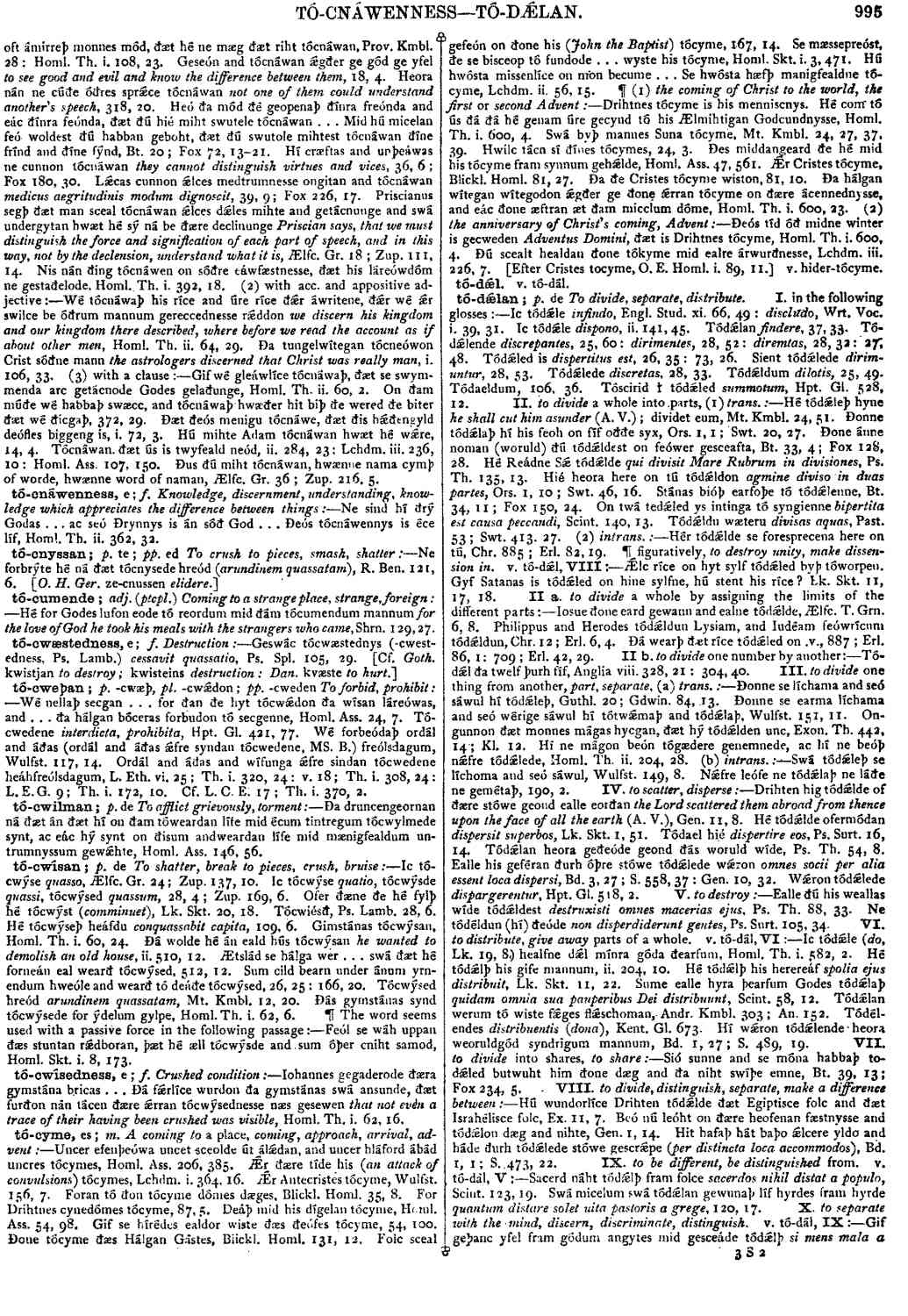
tó-cwísan
- verb [ weak ]
-
Ic tócwýse
quasso,
- Ælfc. Gr. 24;
- Zup. 137, 10.
-
Ic tócwýse
quatio,
tócwýsde
quassi,
tócwýsed
quassum,
- 28, 4;
- Zup. 169, 6.
-
Ofer ðæne ðe hé fylþ hé tócwýst
(comminuet),
- Lk. Skt. 20, 18.
-
Tócwiésð,
- Ps. Lamb. 28, 6.
-
Hé tócwýseþ heáfdu
conquassabit capita,
- 109, 6.
-
Gimstánas tócwýsan.
- Homl. Th. i. 60, 24.
-
Ðá wolde hé án eald hús tócwýsan
he wanted to demolish an old house,
- ii. 510, 12.
-
Ætslád se hálga wer . . . swá ðæt hé forneán eal wearð tócwýsed,
- 512, 12.
-
Sum cild beam under ánum yrnendum hweóle and wearð tó deáðe tócwýsed,
- 26, 25 :
- 166, 20.
-
Tócwýsed hreód
arundinem quassatam,
- Mt. Kmbl. 12, 20.
-
Ðás gymstánas synd tócwýsede for ýdelum gylpe,
- Homl. Th. i. 62, 6.
Feól se wáh uppan ðæs stuntan rǽdboran, þæt hé æll tócwýsde and sum óþer cniht samod,
- Homl. Skt. i. 8, 173.
Bosworth, Joseph. “tó-cwísan.” In An Anglo-Saxon Dictionary Online, edited by Thomas Northcote Toller, Christ Sean, and Ondřej Tichy. Prague: Faculty of Arts, Charles University, 2014. https://bosworthtoller.com/30634.
Checked: 2