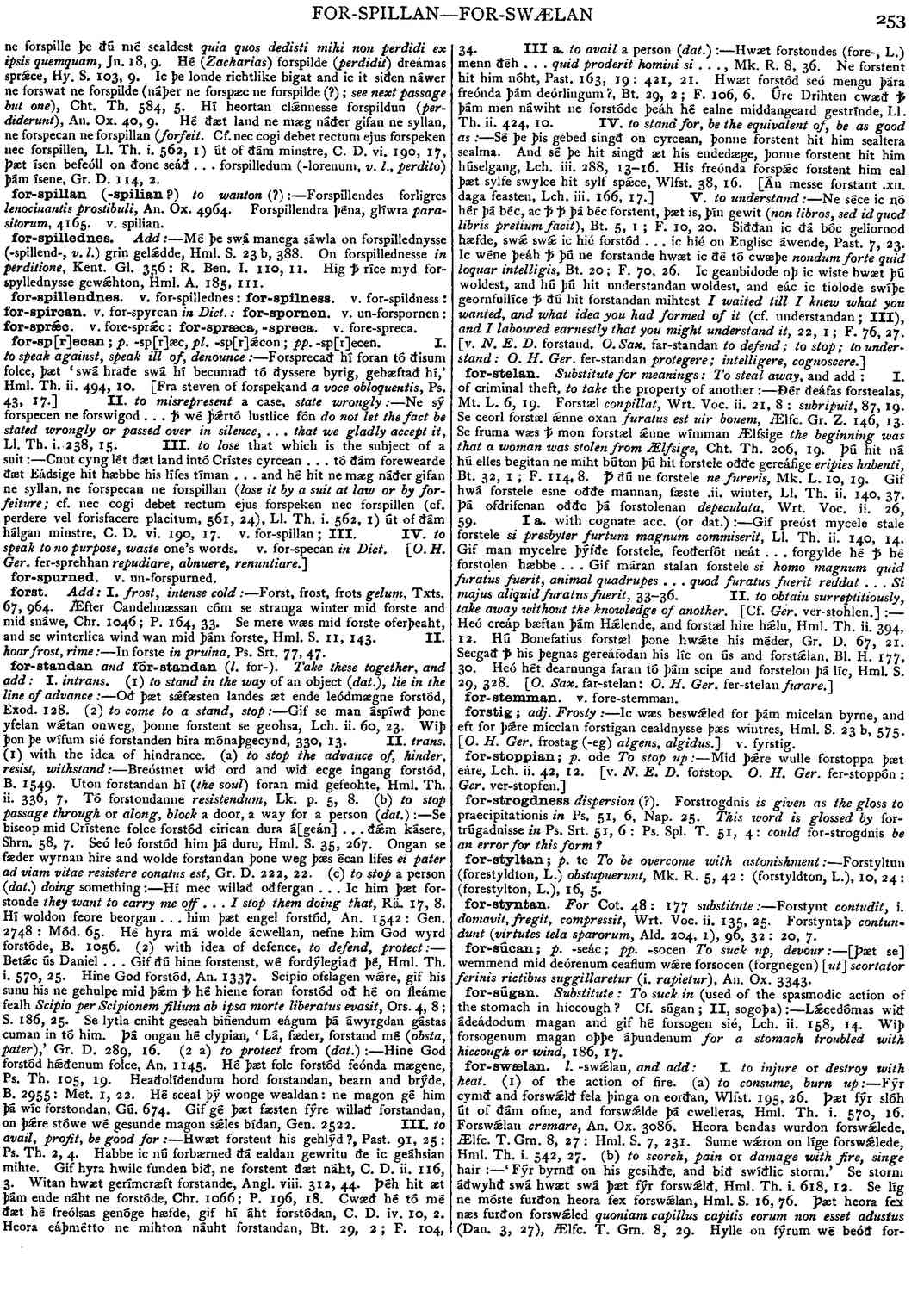
for-standan
- verb
-
Oð þæt sǽfæsten landes æt ende leódmægne forstód,
- Exod. 128.
-
Gif se man áspíwð þone yfelan wǽtan onweg, þonne forstent se geohsa,
- Lch. ii. 60, 23.
-
Wiþ þon þe wífum sié forstanden hira mónaþgecynd,
- 330, 13.
-
Breóstnet wið ord and wið ecge ingang forstód,
- B. 1549.
-
Uton forstandan hí (the soul) foran mid gefeohte,
- Hml. Th. ii. 336, 7.
-
Tó forstondanne
resistendum,
- Lk. p. 5, 8.
-
Se biscop mid Crístene folce forstód cirican dura á[gean] ... ðǽm kásere,
- Shrn. 58, 7.
-
Seó leó forstód him þá duru,
- Hml. S. 35, 267.
-
Ongan se fæder wyrnan hire and wolde forstandan þone weg þæs écan lifes
ei pater ad viam vitae resistere conatus est,
- Gr. D. 222, 22.
-
Hí mec willað oðfergan ... Ic him þæt forstonde
they want to carry me off ... I stop them doing that,
- Rä. 17, 8.
-
Hí woldon feore beorgan ... him þæt engel forstód,
- An. 1542 :
- Gen. 2748 :
- Mód. 65.
-
Hé hyra má wolde ácwellan, nefne him God wyrd forstóde ,
- B. 1056.
-
Betǽc ús Daniel ... Gif ðú hine forstenst, wé fordýlegiað þé,
- Hml. Th. i. 570, 25.
-
Hine God forstód,
- An. 1337.
-
Scipio ofslagen wǽre, gif his sunu his ne gehulpe mid þǽm ꝥ hé hiene foran forstód oð hé on fleáme fealh
Scipio per Scipionem filium ab ipsa morte liberates evasit,
- Ors. 4, 8 ;
- S. 186, 25.
-
Se lytla cniht geseah bifiendum eágum þá áwyrgdan gástas cuman in tó him. Þá ongan hé clypian, 'Lá, fæder, forstand mé ( obsta, pater ),'
- Gr. D. 289, 16.
-
Hine God forstód hǽðenum folce,
- An. 1145.
-
Hé þæt folc forstód feónda mægene,
- Ps. Th. 105, 19.
-
Heaðolíðendum hord forstandan, bearn and brýde,
- B. 2955 :
- Met. 1, 22.
-
Hé sceal þý wonge wealdan: ne magon gé him þá wíc forstondan ,
- Gú. 674.
-
Gif gé þæt fæsten fýre willað forstandan, on þǽre stówe wé gesunde magon sǽles bídan,
- Gen. 2522.
-
Hwæt forstent his gehlýd?,
- Past. 91, 25 :
- Ps. Th. 2, 4.
-
Habbe ic nú forbærned ðá ealdan gewritu ðe ic geáhsian mihte. Gif hyra hwilc funden bið, ne forstent ðæt náht,
- C. D. ii. 116, 3.
-
Witan hwæt gerímcræft forstande,
- Angl. viii. 312, 44.
-
Þéh hit æt þám ende náht ne forstóde,
- Chr. 1066 ;
- P. 196, 18.
-
Cwæð hé tó mé ðæt hé freólsas genóge hæfde, gif hí áht forstódan ,
- C. D. iv. 10, 2.
-
Heora eáþmétto ne mihton náuht forstandan,
- Bt. 29, 2 ;
- F. 104, 34.
-
Hwæt forstondes (fore-,
- L.
quid proderit homini si ...,
- Mk. R. 8, 36.
-
Ne forstent hit him nóht,
- Past. 163, 19 :
- 421, 21.
-
Hwæt forstód seó mengu þára freónda þám deórlingum?,
- Bt. 29, 2 ;
- F. 106, 6.
-
Úre Drihten cwæð ꝥ þám men náwiht ne forstóde þeáh hé ealne middangeard gestrínde,
- Ll. Th. ii. 424, 10.
-
Sé þe þis gebed singð on cyrcean, þonne forstent hit him sealtera sealma. And sé þe hit singð æt his endedæge, þonne forstent hit him húselgang,
- Lch. iii. 288, 13-16.
-
His freónda forspǽc forstent him eal þæt sylfe swylce hit sylf spǽce,
- Wlfst. 38, 16.
- .xii.
- Lch. iii. 166, 17.
-
Ne séce ic nó hér þá bec, ac ꝥ ꝥ þá béc forstent, þæt is, þín gewit
(non libros, sed id quod libris pretium facit),
- Bt. 5, 1 ;
- F. 10, 20.
-
Siððan ic ðá bóc geliornod hæfde, swǽ swǽ ic hié forstód ... ic hié on Englisc áwende,
- Past. 7, 23.
-
Ic wéne þeáh ꝥ þú ne forstande hwæt ic ðé tó cwæþe
nondum forte quid loquar intelligis,
- Bt. 20 ;
- F. 70, 26.
-
Ic geanbidode oþ ic wiste hwæt þú woldest, and hú þú hit understandan woldest, and eác ic tiolode swíþe geornfullíce ꝥ ðú hit forstandan mihtest
I waited till I knew what you wanted, and what idea you had formed of it (
Similar entriescf. understandan;III. ), and I laboured earnestly that you might understand it,- 22, 1 ;
- F. 76, 27.
Bosworth, Joseph. “for-standan.” In An Anglo-Saxon Dictionary Online, edited by Thomas Northcote Toller, Christ Sean, and Ondřej Tichy. Prague: Faculty of Arts, Charles University, 2014. https://bosworthtoller.com/45981.
Checked: 2