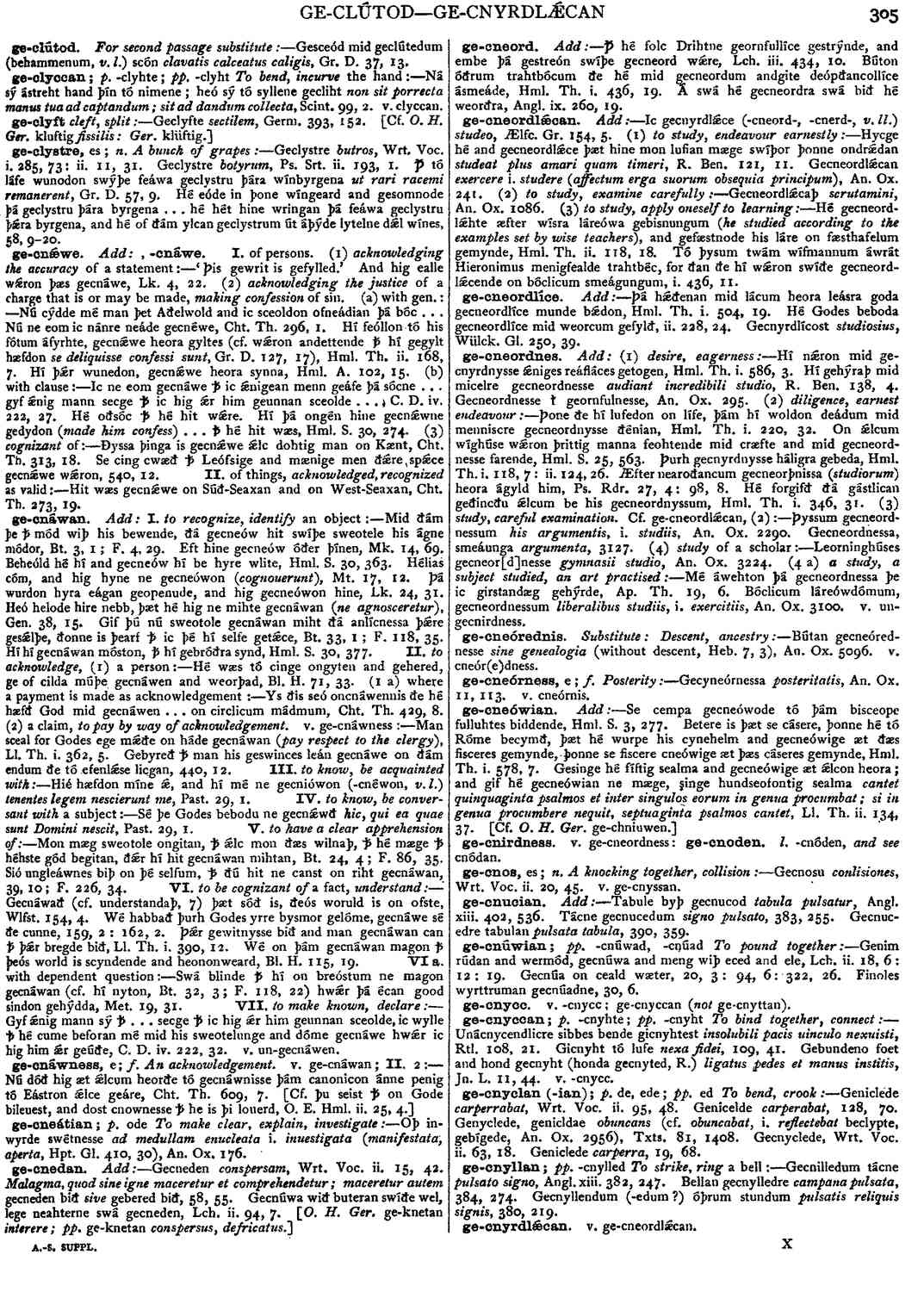
ge-cnáwan
-
Mid ðám þe ꝥ mód wiþ his bewende, ðá gecneów hit swíþe sweotele his ágne módor,
- Bt. 3, 1;
- F. 4, 29.
-
Eft hine gecneów óðer þínen,
- Mk. 14, 69.
-
Beheóld hé hí and gecneów hí be hyre wlite,
- Hml. S. 30, 363.
-
Hélias cóm, and hig hyne ne gecneówon (
cognouerunt
),- Mt. 17, 12.
-
Þá wurdon hyra eágan geopenude, and hig gecneówon hine,
- Lk. 24, 31.
-
Heó helode hire nebb, þæt hé hig ne mihte gecnáwan (
ne agnosceretur
),- Gen. 38, 15.
-
Gif þú nú sweotole gecnáwan miht ðá anlícnessa þǽre gesǽlþe, ðonne is þearf ꝥ ic þé hí selfe getǽce,
- Bt. 33, 1;
- F. 118, 35.
-
Hí hí gecnáwan móston, ꝥ hiacute; gebróðra synd,
- Hml. S. 30, 377.
-
Hé wæs tó cinge ongyten and gehered, ge of cilda múþe gecnáwen and weorþad.
- Bl. H. 71, 33. (l a)
where a payment is made as acknowledgement
- :--
Ys ðis seó oncnáwennis ðe hé hæfð God mid gecnáwen ... on circlicum mádmum
,- Cht. Th. 429, 8.
-
Man sceal for Godes ege mǽðe on háde gecnáwan (
pay respect to the clergy
),- Ll. Th. i. 362, 5.
-
Gebyreð ꝥ man his geswinces leán gecnáwe on ðám endum ðe tó efenlǽse licgan,
- 440, 12.
-
Hié hæfdon míne ǽ, and hí mé ne gecniówon (-cnéwon,
v.l.)tenentes legem nescierunt me,
- Past. 29, 1.
-
Sé þe Godes bebodu ne gecnǽwð
hic, qui ea quae sunt Domini nescit,
- Past. 29, 1.
-
Mon mæg sweotole ongitan, ꝥ ǽlc mon ðæs wilnaþ, ꝥ hé mæge ꝥ héhste gód begitan, ðǽr hí hit gecnáwan mihtan,
- Bt. 24, 4;
- F. 86, 35.
-
Sió ungleáwnes biþ on þé selfum, ꝥ ðú hit ne canst on riht gecnáwan,
- 39, 10;
- F. 226, 34.
-
Gecnáwað (cf. understandaþ, 7) þæt sóð is, ðeós woruld is on ofste,
- Wlfst. 154, 4.
-
Wé habbað þurh Godes yrre bysmor gelóme, gecnáwe sé ðe cunne,
- 159, 2: 162, 2.
-
Þǽr gewitnysse bið and man gecnáwan can ꝥ þǽr bregde bið,
- Ll. Th. i. 390, 12.
-
Wé on þám gecnáwan magon ꝥ þeós world is scyndende and heononweard,
- Bl. H. 115, 19.
-
Swá blinde ꝥ hí on breóstum ne magon gecnáwan (cf. hí nyton,
- Bt. 32, 3;
- F. 118, 22)
- Met. 19, 31.
-
Gyf ǽnig mann sý ꝥ ... secge ꝥ ic hig ǽr him geunnan sceolde, ic wylle ꝥ hé cume beforan mé mid his sweotelunge and dóme gecnáwe hwǽr ic hig him ǽr geúðe,
- C.D. iv. 222, 32.
Bosworth, Joseph. “ge-cnáwan.” In An Anglo-Saxon Dictionary Online, edited by Thomas Northcote Toller, Christ Sean, and Ondřej Tichy. Prague: Faculty of Arts, Charles University, 2014. https://bosworthtoller.com/47476.
Checked: 1