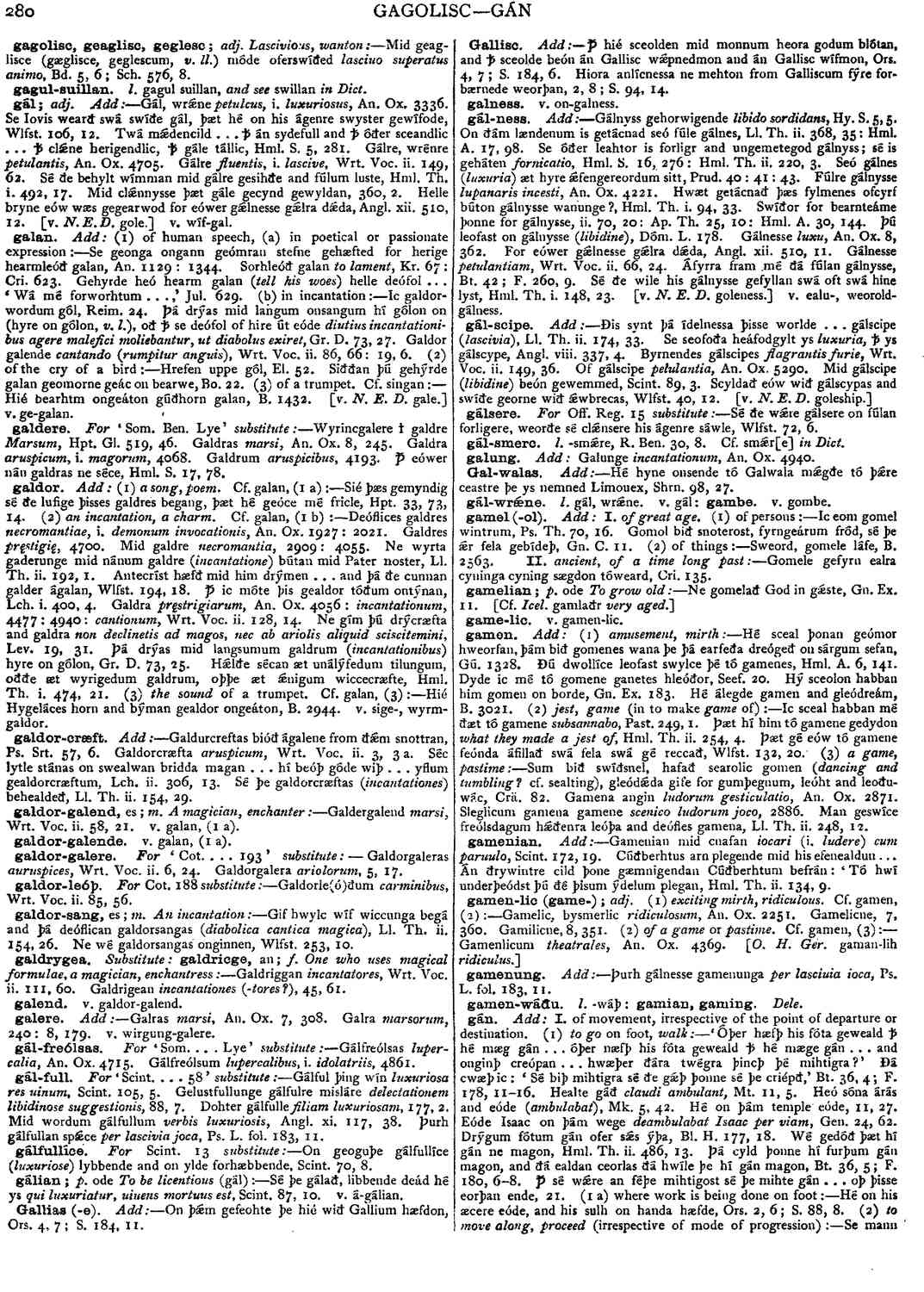
gán
-
'Óþer hæfþ his fóta geweald ꝥ hé mæg gán. . . óþer næfþ his fóta geweald ꝥ hé mæge gán. . . and onginþ creópan . . . hwæþer ðára twégra þincþ þé mihtigra ?' Ðá cwæþic : ' Sé biþ mihtigra sé ðe gǽþ þonne sé þe criépð, '
- Bt. 36, 4 ;
- F. 178, 11-16.
-
Healte gáð
claudi ambulant
,- Mt. ll, 5.
-
Heó sóna árás and eóde
(ambulabat
),- Mk. 5, 42.
-
Hé on þám temple eóde,
- 11, 27.
-
Eóde Isaac on þám wege
deambulabat Isaac per viam
,- Gen. 24, 62.
-
Drýgum fótum gán ofer sǽs ýþa,
- Bl. H. 177, 18.
-
Wé gedóð þæt hí gán ne magon.
- Hml. Th. ii. 486, 13.
-
Þá cyld þonne hí furþum gán magon, and ðá ealdan ceorlas ðá hwile þe hí gán magon,
- Bt. 36, 5 ;
- F. 180, 6-8.
-
ꝥ sé wǽre an féþe mihtigost sé þe mihte gán . . . oþ þisse eorþan ende,
- 21.
-
Hé on his æcere eóde, and his sulh on handa hæfde,
- Ors. 2, 6 ;
- S. 88, 8.
-
Se mannána gǽþ úprihte,
- Bt. 41, 6 ;
- F. 254, 30.
-
Geond ealle eorþan gǽþ heora swég.
- Bl. H. 133, 34.
-
Suá suá healt monn oððe untrum, hwílum hié gáð, hwílum hié restað,
- Past. 67, 11.
-
Ðá eóde hé furþor,
- Bt. 35, 6 ;
- F. 108, 23, 28.
-
Þæt feórðe cyn fyrmest eóde, wód on wǽgstreám,
- Exod. 310.
-
Gáð from geate tó geate ðurh midde ðá ceastre,
- Past. 383, 2.
-
Þú meahtest þe gán singende þone ealdan cwide,
- Bt. 14, 3 ;
- F. 46, 28.
-
Hí gehátað holdlíce, swá hyra hyht ne gǽð,
- Leás. 14 :
- Ps. Th. 138, 11.
-
Seó orsorhnes gǽþ scýrmǽlum,
- Bt. 20 ;
- F. 72, 4.
-
Gáð on Drihtenes bebodum,
- Deut. 29, 12.
-
Gif hwá swá dyrstig sý ꝥ ongeán Godes lage gá,
- Cht. E. 230, 20.
-
Ðæt mon wite Godes beboda weg, and ðǽr nylle on gán,
- Past. 67, 10,
-
Eall þæs cyninges rǽd eóde be his dihte,
- Hml. S. 6, 143.
-
Gǽð geréfa mín fægen freóbearnum,
- Gen. 2181.
-
Gáð gé gewǽpnode,
- P. 83, 12.
-
Feówer and twéntig mónða gǽð seó módor (the elephant) mid folan,
- Hml. S. 25, 569.
-
Ðá hwíle ðe hé ǽne betyrnð gǽð forð feówor and twéntig tída.
- Hex. 8, 31.
-
Rǽd forð gǽð,
- Exod. 525 .
-
Gif se hund losige, gá þeós bót hwæðere forð,
- Ll. Th. i. 78, 5 :
- 130, 15 .
-
Sceal sóð forð gán wyrd,
- Gen. 2354.
-
Gá án mynet ofer ealue þæs cynges anweald,
- Ll. Th. i. 268, 27.
-
Hund-twelftig saltera sealma gǽð for xii mónþa festen,
- Lch. iii. 166, 22.
-
Hé him feala foresǽde swá him syððen an eóde,
- Shrn. 15, 10, 21 :
- 16, 24.
-
For hwan gǽst þú, and þú forléte þá þe þé bǽdon?,
- Bl. H. 249, 4.
-
Eáde
abiit
,- Mk. R. 6, 46.
-
Hié eódun þonan
abierunt
,- Mt. R. 2, 9,
-
Uton gán heonon,
- Jn. 14, 31.
-
Him upp gándum of ðám baðe,
- Gr. D. 343, 7.
-
Hé gǽð of his mǽglage þonne hé gebýhð tó regollage,
- Ll. Th. i. 348, 2.
-
Æðelm eóde of ðám geflite,
- Cht. Th. 174, 2.
-
Dol bið si þe gǽð on deóp wæter, sé þe sund nafað,
- Sal. 224.
-
Nóe on þá earce eóde,
- Mt. 24, 38.
-
Eóde eorl tó þám ceorle,
- By. 132.
-
Ðeáh hí men oððe hundas wiþ eódon,
- Bt. 35, 6 ;
- F. 168, 3.
-
Gá ðé tó ǽmetthylle,
- Past. 191, 25.
-
Cóm ðǽr gán in tó mé wísdóm,
- Bt. 3, I ;
- F. 4, 17 :
- B. 1163.
-
:-- Hé eóde þæt hé for eaxlum gestód Denigea freán,
- B. 358.
-
Gá nú tó setle (go and feast), symbel-wynne dreóh,
- B. 1782.
-
Eóde Daniel swefen reccan sínum freán,
- Dan. 158.
-
Eóde folccwén tó hire freán sittan,
- B. 640: 918.
-
Ðenden hiǽ eódun bycgan,
- Mt. R. 25, 10.
-
Þonne mon wile slápan gán,
- Lch. ii. 228, 5.
-
Ðá cóm in gán ealdor þegna Hróðgár grétan,
- B. 1644.
-
Gáð fromlíce þæt gé gúðfreán gylp forbégan,
- An. 1334 :
- 1184 .
-
Gáð and leornigeað
euntes discite
,- Mt. 9, 13.
-
Gán þá þe ꝥ geat ágan and gebéten.
- Ll. Th. i. 128, 8.
-
Hý gán siþþan and gescyldigen hine,
- 206, 3.
-
ꝥ hé ēode þrēóra sum . . . and þone áð syllen,
- 204, 28.
-
Uton gán and hláfas bicgan,
- Mk. 6, 37.
- ¶ without
and
Þonne gǽð oðer man, seleþ his ceáp fore.
- Ll. Th. i. 142, 2.
-
Gǽð hé tó medo,
- B. 603.
-
Eóde hé fǽmnan tó sprǽce
he went to have speech with the maiden
.- Jul. 89.
-
Tó geþæhtunge eódun
consilio inito
,- Mt. R. 27, 7.
-
Gá man tó scrifte,
- Wlfst. 181, 2.
-
Gá hé eft tó þám ordále,
- Ll. Th. i. 294, 17.
-
Tó þisum húsle tó gánne,
- Ll. Lbmn. 414, 2.
-
Gá seó mǽgð him on borh,
- Ll. Th. i. 198, 24.
-
And swá eágan gáð earmre þeówenan, þonne heó on hire hlǽfdigean handa lócað,
- Ps. Th. 12 2, 3.
-
On þá rǽdenne þe hé him gá tó honda,
- Ll. Th. i. 142, 3.
-
Gif hé vville on hand gán,
- 90, 7.
-
Ne gá þú mid þínum esne in tó dóme,
- Ps. Th. 142, 2.
-
Ðurh ðone æpl ðæs eágan mon mæg geseón, gif him ðæt fleáh on ne gǽð,
- Past. 69, 18.
-
Gǽð seó sunne on ꝥ tácn
Aquarium
,- Angl. viii. 305, 35.
-
Mín lár in gǽð on þin ondgit,
- Bt. 13 ;
- F. 36, 33.
-
Sió heáfodpanne gǽþ on riht sóna.
- Lch. ii. 342, 7.
-
Mín gebed tó þé eóde,
- Ps. Th. 60, 4.
-
Gán hié ealle on þeówot.
- Ll. Th. i. 106, 17.
-
Sceolde monig ides bifiende gán on fremdes fæðm,
- Gen. 1970.
-
Gǽð gelíce bót tó eallum.
- Ll. Th. i. 98, 16.
-
Gá ǽlc cyric-sceatt intó þám ealdan mynstre,
- 262, 16.
-
Gá ꝥ bócland þám cyninge tó handa,
- 420, 11.
-
Hit riht is ꝥ þriddan dǽl þáre teóðunge þe tó cirican gebyrige gá tó ciricbóte, óðer dǽl þám Godes þeúwan, þridde Godes þearfum,
- Ll. Th. i. 342, 8.
-
Ne gǽð ná máre tó métinge búton þæt þú hit geseó and herige,
- Hml. Th. i. 186, 6.
-
Gif wé willað áreccan ealle ðá gewitnyssa . . . , þonne gǽð þǽr swíðe micel hwíl tó,
- 18, 11.
-
xv. pund wætres gáþ to sestre,
- Lch. ii. 298, 26.
-
Se rodor gǽð under ðás eorðan ale swá deóp swá bufan.
- Hex. 10, 2.
-
On þís ilcan geáre eóde se sæster hwǽtes tó .lv. penega and eác furðor,
- Chr. 1039 ;
- P. 161,28 :
- 1043 ;
- P. 165, 1.
-
Se man þe ongeán ús gǽð
homo qui venit in occursum nobis
,- Gen. 24, 65.
-
Hér gǽð se swefnigend
ecce somniator venit
,- 37, 19.
-
Gá þé hér tó mé
huc ad me ingredere
,- Gr. D. 25, 20.
-
Gáð tó ús,
- By. 93.
-
Gá hé hider tó mé,
- Past. 383, 1.
-
Lǽtan hí hér beforan ús forð gán,
- Hml. S. 23, 681.
-
Sanctus Ióhannes gǽþ beforan eallum óþrum wítgan,
- Bl. H. 167, 22.
-
Ðá þúhte ús eallum ꝥ Helmstán móste gán forð mid ðon bócon,
- Cht. Th. 170, 17.
-
Ne eódun hí mid him,
- Jn. 6, 66.
-
His metecú mót gán mid hláfordes oxan . . . gá his metecú mid hláfordes cú,
- Ll. Th. i. 438, 16, 20.
-
Of eallum ðǽm worde þe gáþ of Godes múþe,
- Bl. H. 27, 9.
-
Andlang Cendefer ðér hit (the boundary) ǽr úp eóde,
- C. D. v. 40, 17.
-
Hwílum hié oft on dæge út gáð, and þonne lytlum ; hwílum ǽne, and þonne micel,
- Lch. ii. 230, 21.
-
Hú man lyste út gán, and ne mæg,
- 164, 17.
-
.vi. gear þeówige hé, þý siofoðan beó hé frióh. Mid swelce hrægle hé in eóde, mid swelce gá hé út,
- Ll. Th. i. 46, 4.
-
ꝥ man habbe gemót . . . , and gán út þá yldestan . xii. þegnas and se geréfa mid and swerian . . . ,
- Ll. Th. i. 294, 3.
Bosworth, Joseph. “gán.” In An Anglo-Saxon Dictionary Online, edited by Thomas Northcote Toller, Christ Sean, and Ondřej Tichy. Prague: Faculty of Arts, Charles University, 2014. https://bosworthtoller.com/46934.
Checked: 1