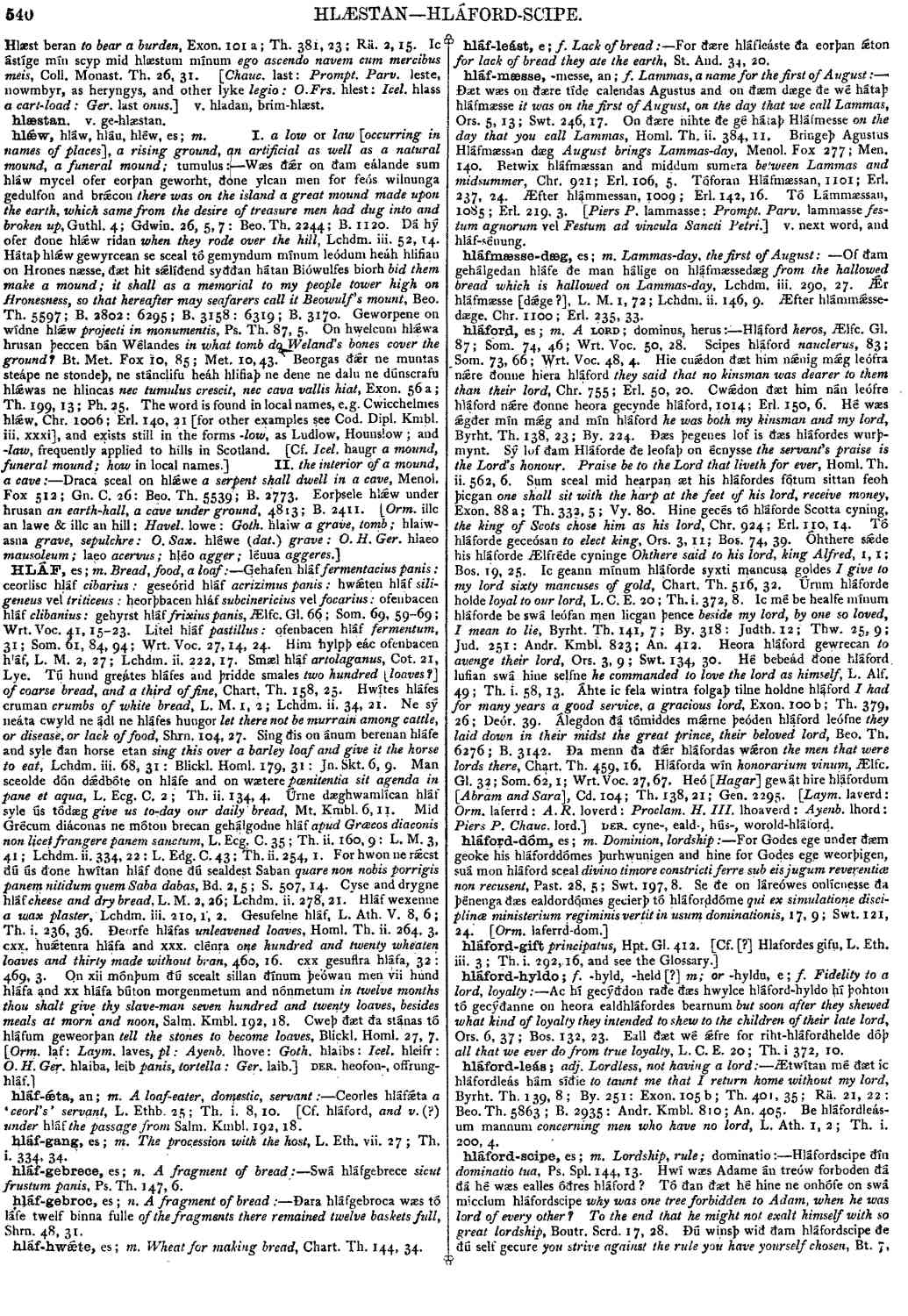
hlǽw
- noun [ masculine ]
-
Wæs ðǽr on ðam eálande sum hláw mycel ofer eorþan geworht, ðone ylcan men for feós wilnunga gedulfon and brǽcon
there was on the island a great mound made upon the earth, which same from the desire of treasure men had dug into and broken up,
- Guthl. 4;
- Gdwin. 26, 5, 7:
- Bec. Th. 2244;
- B. 1120.
-
Dá hý ofer ðone hlǽw ridan
when they rode over the hill,
- Lchdm. iii. 52, 14.
-
Hátaþ hlǽw gewyrcean se sceal tó gemyndum mínum leódum heáh hlifian on Hrones næsse, ðæt hit sǽlíðend syððan hátan Biówulfes biorh
bid them make a mound; it shall as a memorial to my people tower high on Hronesness, so that hereafter may seafarers call it Beowulf's mount,
- Beo. Th. 5597;
- B. 2802: 6295;
- B. 3158: 6319;
- B. 3170.
-
Geworpene on wídne hlǽw
projecti in monumentis,
- Ps. Th. 87, 5.
-
On hwelcum hlǽwa hrusan þeccen bán Wélandes
in what tomb do Weland's bones cover the ground?
- Bt. Met. Fox 10, 85;
- Met. 10, 43.
-
Beorgas ðǽr ne muntas steápe ne stondeþ, ne stánclifu heáh hlifiaþ ne dene ne daiu ne dúnscrafu hlǽwas ne hlincas
nec tumulus crescit, nec cava vallis hiat,
- Exon. 56 a;
- Th. 199, 13;
- Ph. 25.
- Chr. 1006;
- Erl. 140, 21 [for other examples see Cod. Dipl. Kmbl. iii. xxxi]
-
Draca sceal on hlǽwe
a serpent shall dwell in a cave,
- Menol. Fox 512;
- Gn. C. 26:
- Beo. Th. 5539;
- B. 2773.
-
Eorþsele hlǽw under hrusan
an earth-hall, a cave under ground,
- 4813;
- B. 2411.
Bosworth, Joseph. “hlǽw.” In An Anglo-Saxon Dictionary Online, edited by Thomas Northcote Toller, Christ Sean, and Ondřej Tichy. Prague: Faculty of Arts, Charles University, 2014. https://bosworthtoller.com/19169.
Checked: 2