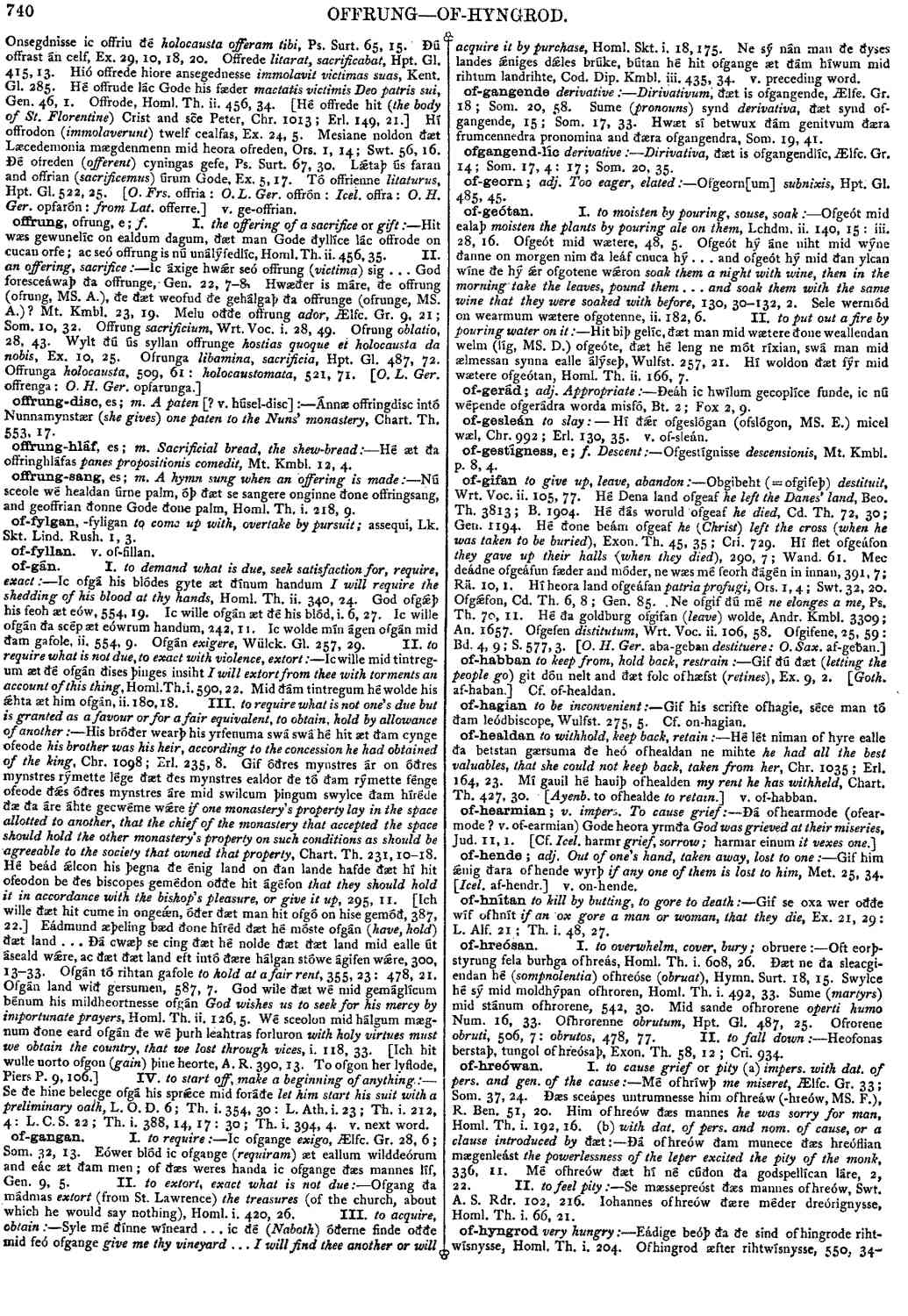
of-gán
- verb [ anomalous ]
Ic ofgá his blódes gyte æt ðínum handum
I will require the shedding of his blood at thy hands,
- Homl. Th. ii. 340, 24 .
God ofgǽþ his feoh æt eów,
- 554, 19 .
Ic wille ofgán æt ðé his blód,
- i.6, 27 .
Ic wille ofgán ða scép æt eówrum handum,
- 242, 11 .
Ic wolde mín ágen ofgán mid ðam gafole,
- ii. 554, 9 .
Ofgán
exigere,
- Wülck. Gl. 257, 29 .
Ic wille mid tintreg-um æt ðé ofgán ðises þinges insiht
I will extort from thee with torments an account of this thing,
- Homl. Th. i. 590, 22 .
-
Mid ðám tintregum hé wolde his ǽhta æt him ofgán,
- ii. 180, 18 .
His bróðer wearþ his yrfenuma swá swáhé hit æt ðam cynge ofeode
his brother was his heir, according to the concession he had obtained of the king.
- Chr. 1098 ;
- -Erl. 235, 8 .
-
Gif óðres mynstres ár on óðres mynstres rýmette lége ðæt ðes mynstres ealdor ðe tó ðam rýmette fénge ofeode ðǽs óðres mynstres áre mid swilcum þingum swylce ðam híréde ðæ ða áre áhte gecwéme wǽre
if one monastery's property lay in the space allotted to another, that the chief of the monastery that accepted the space should hold the other monastery's property on such conditions as should be agreeable to the society that owned that property.
- Chart. Th. 231, 10-18 .
Hé beád ǽlcon his þegna ðe énig land on ðan lande hafde ðæt hí hit ofeodon be ðes biscopes gemédon oððe hit ágéfon
that they should hold it in accordance with the bishop's pleasure, or give it up,
- 295, 11 .
-
[
Ich wille ðæt hit cume in ongeǽn, ððer ðæt man hit ofgó on hise gemóð,
- 387, 22 .
-
Eádmund æþeling bæd ðone híréd ðæt hé móste ofgán
(have, hold)
ðæt land . . . Ðá cwæþ se cing ðæt hé nolde ðæt ðæt land mid ealle út aseald wǽre, ac ðæt ðæt land eft intó ðære hálgan stówe ágifen wǽre,
- 300, 13-33 -
-
Ofgán tó rihtan gafole
to hold at a fair rent,
- 355, 23 :
- 478, 21 .
-
Ofgán land wið gersumen,
- 587, 7 .
-
God wile ðæt wé mid gemáglícum bénum his mildheortnesse ofgán
God wishes us to seek for his mercy by importunate prayers,
- Homl. Th. ii. 126, 5 .
-
Wé sceolon mid hálgum mægnum ðone eard ofgán ðe wé þurh leahtras forluron
with holy virtues must we obtain the country, that we lost through vices,
- i. 118, 33 .
-
[
lch hit wulle uorto ofgon (gain) þine heorte,
- A. R. 390, 13 .
-
To ofgon her lyfode,
- Piers P. 9, 106 .
-
Se ðe hine belecge ofgá his spriéce mid foráðe let him start his suit with a preliminary oath,
- L. O. D. 6 ;
- Th. i. 354, 30 :
- L. Ath. i. 23 ;
- Th. i. 212, 4 :
- L. C. S. 22 ;
- Th. i. 388, 14, 17 : 30 ;
- Th. i. 394, 4 .
Bosworth, Joseph. “of-gán.” In An Anglo-Saxon Dictionary Online, edited by Thomas Northcote Toller, Christ Sean, and Ondřej Tichy. Prague: Faculty of Arts, Charles University, 2014. https://bosworthtoller.com/24308.
Checked: 1