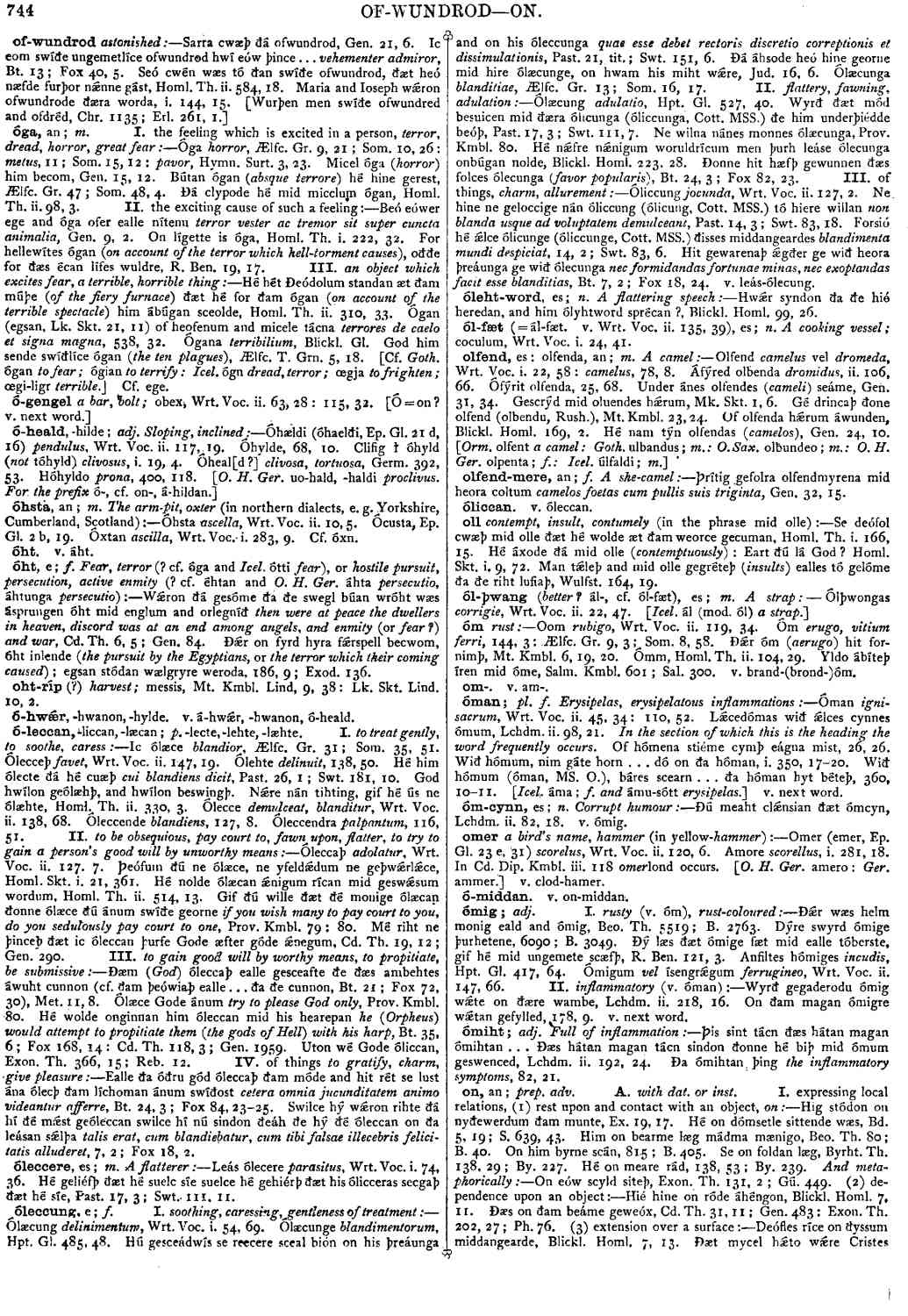
óga
- noun [ masculine ]
-
Óga
horror,
- Ælfc. Gr. 9, 21 ;
- Som. 10, 26 :
metus
- 11 ;
- Som. 15, 12
pavor,
- Hymn. Surt. 3, 23 .
-
Micel óga
horror
him becom,
- Gen. 15, 12 .
-
Bútan ógan
(absque terrore)
hé hine gerest,
- Ælfc. Gr. 47 ;
- Som. 48, 4 .
-
Ða clypode hé mid micclum ógan,
- Homl. Th. ii. 98, 3 .
-
Beó eówer ege and óga ofer ealle nítenu
terror vester ac tremor sit super cuncta animalia,
- Gen. 9, 2 .
-
On lígette is óga,
- Homl. Th. i. 222, 32 .
-
For hellewítes ógan
on account of the terror which hell-torment causes
oððe for Sæs écan lífes wuldre
- R. Ben. 19, 17 .
-
Hé hét Ðeódolum standan æt ðam múþe (of the fiery furnace) ðæt hé for ðam ógan
on account of the terrible spectacle
him ábúgan sceolde.
- Homl. Th. ii. 310, 33 .
-
Ógan (egsan, Lk. Skt. 21, 11) of heofenum and micele tácna
terrores de caelo et signa magna,
- 538, 32 .
-
Ógana
terribilium,
- Blickl. Gl.
God him sende swíðlíce ógan
(the ten plagues)
- Ælfc. T. Grn. 5, 18 .
Bosworth, Joseph. “óga.” In An Anglo-Saxon Dictionary Online, edited by Thomas Northcote Toller, Christ Sean, and Ondřej Tichy. Prague: Faculty of Arts, Charles University, 2014. https://bosworthtoller.com/24406.
Checked: 1