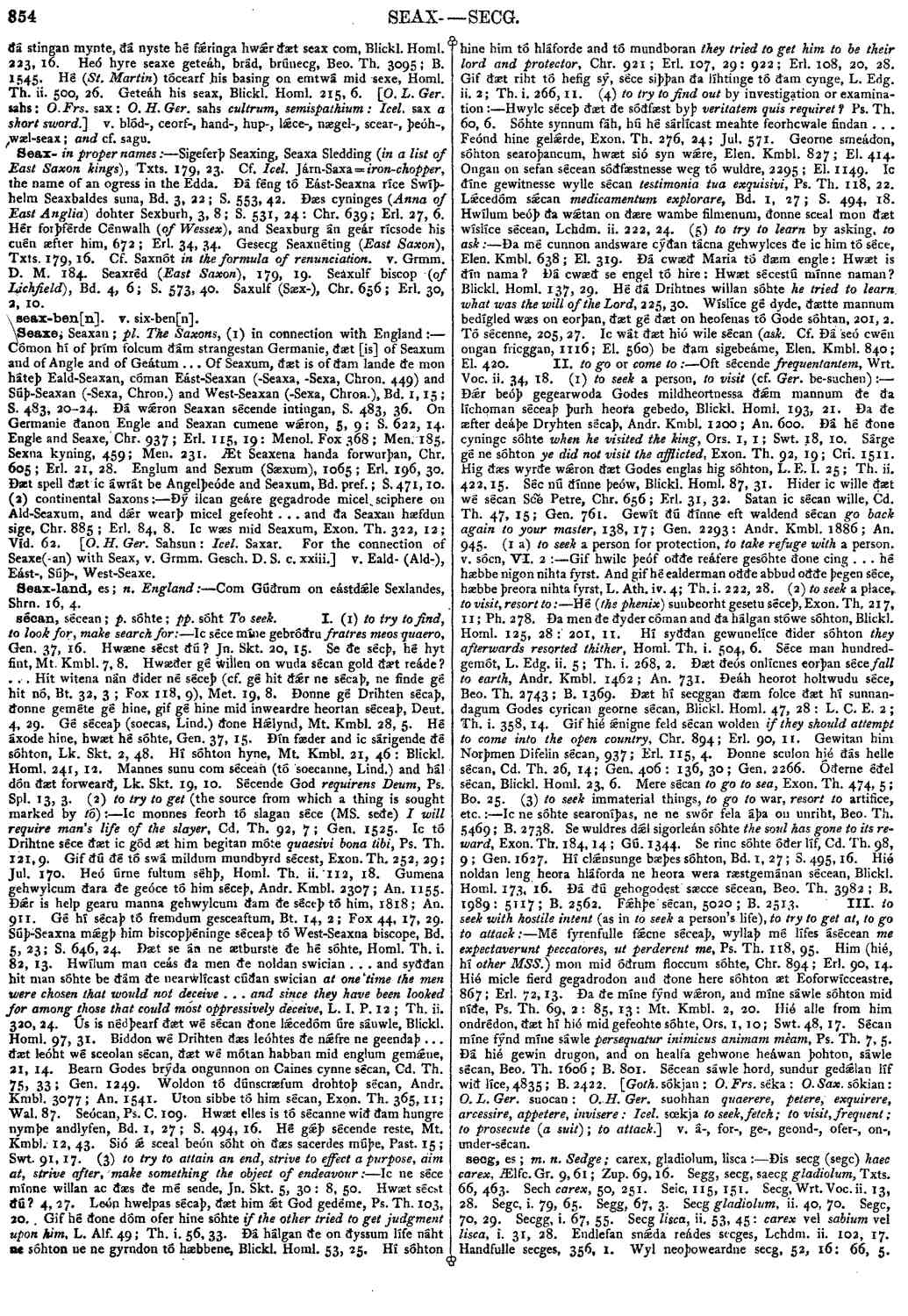
sécan
- verb [ weak ]
-
Ic séce míne gebróðru
fratres meos quaero,
- Gen. 37, 16 .
Hwæne sécst ðú?
- Jn. Skt. 20, 15 .
-
Se ðe sécþ, hé hyt fint,
- Mt. Kmbl. 7, 8 .
-
Hwæðer gé willen on wuda sécan gold ðæt reáde? . . . Hit witena nán ðider né séceþ
(cf. gé hit ðǽr ne sécaþ, ne finde gé hit nó,)- (Bt. 32, 3 ;
- Fox 118, 9) ,
- Met. 19, 8 .
-
Ðonne gé Drihten sécaþ, ðonne geméte gé hine, gif gé hine mid inweardre heortan séceaþ,
- Deut. 4, 29 .
-
Gé séceaþ (soecas,
- Lind.
- Mt. Kmbl. 28, 5 .
-
Hé áxode hine, hwæt hé sóhte,
- Gen. 37, 15 .
-
Ðín fæder and ic sárigende ðé sóhton,
- Lk. Skt. 2, 48 .
-
Hí sóhton hyne,
- Mt. Kmbl. 21, 46 :
- Blickl. Homl. 241, 12 .
-
Mannes sunu com sécean (tó soecanne,
- Lind.
- Lk. Skt. 19, 10 .
-
Sécende God
requirens Deum,
- Ps. Spl. 13, 3 .
-
Ic monnes feorh tó slagan séce (MS. seðe)
I will require man's life of the slayer,
- Cd. Th. 92, 7 ;
- Gen. 1525 .
-
Ic tó Drihtne séce ðæt ic gód æt him begitan móte
quaesivi bona tibi,
- Ps. Th. 121, 9 .
-
Gif ðú ðé tó swá mildum mundbyrd sécest,
- Exon. Th. 252, 29 ;
- Jul. 170 .
-
Heó úrne fultum séhþ,
- Homl. Th. ii. 112, 18 .
-
Gumena gehwylcum ðara ðe geóce tó him séceþ,
- Andr. Kmbl. 2307 ;
- An. 1155 .
-
Ðǽr is help gearu manna gehwylcum ðam ðe séceþ tó him,
- 1818 ;
- An. 911 .
-
Gé hí sécaþ tó fremdum gesceaftum,
- Bt. 14, 2 ;
- Fox 44, 17, 29 .
-
Súþ-Seaxna mǽgþ him biscopþéninge séceaþ tó West-Seaxna biscope,
- Bd. 5, 23 ;
- S. 646, 24 .
-
Ðæt se án ne ætburste ðe hé sóhte,
- Homl. Th. i. 82, 13 .
-
Hwílum man ceás ða men ðe noldan swician . . . and syððan hit man sóhte be ðám ðe nearwlícast cúðan swician
at one time the men were chosen that would not deceive . . . and since they have been looked for among those that could most oppressively deceive,
- L. I. P. 12 ;
- Th. ii. 320, 24 .
-
Ús is nédþearf ðæt wé sécan ðone lǽcedóm úre sáuwle,
- Blickl. Homl. 97, 31 .
-
Biddon wé Drihten ðæs leóhtes ðe nǽfre ne geendaþ . . . ðæt leóht wé sceolan sécan, ðæt wé mótan habban mid englum gemǽne,
- 21, 14 .
-
Bearn Godes brýda ongunnon on Caines cynne sécan,
- Cd. Th. 75, 33 ;
- Gen. 1249 .
-
Woldon tó dúnscræfum drohtoþ sécan,
- Andr. Kmbl. 3077 ;
- An. 1541 .
-
Uton sibbe tó him sécan,
- Exon. Th. 365, 11 ;
- Wal. 87 .
-
Seócan,
- Ps. C. 109 .
-
Hwæt elles is tó sécanne wið ðam hungre nymbe andlyfen,
- Bd. 1, 27 ;
- S. 494, 16 .
-
Hé gǽþ sécende reste,
- Mt. Kmbl. 12, 43 .
-
Sió ǽ sceal beón sóht on ðæs sacerdes múþe,
- Past. 15 ;
- Swt. 91, 17 .
-
Ic ne séce mínne willan ac ðæs ðe mé sende,
- Jn. Skt. 5, 30 :
- 8, 50 .
Hwæt sécst ðú?
- 4, 27 .
-
León hwelpas sécaþ, ðæt him ǽt God gedéme,
- Ps. Th. 103, 20 .
-
Gif hé ðone dóm ofer hine sóhte
if the other tried to get judgment upon him,
- L. Alf. 49 ;
- Th. i. 56, 33 .
-
Ðá hálgan ðe on ðyssum lífe náht ne sóhton ne ne gyrndon tó hæbbene,
- Blickl. Homl. 53, 25 .
-
Hí sóhton hine him tó hláforde and tó mundboran
they tried to get him to be their lord and protector,
- Chr. 921 ;
- Erl. 107, 29 :
- 922 ;
- Erl. 108, 20, 28 .
-
Gif ðæt riht tó hefig sý, séce siþþan ða líhtinge tó ðam cynge,
- L. Edg. ii. 2 ;
- Th. i. 266, 11 .
-
Hwylc séceþ ðæt ðe sóðfæst byþ
veritatem quis requiret?
- Ps. Th. 60, 6 .
-
Sóhte synnum fáh, hú hé sárlícast meahte feorhcwale findan . . . Feónd hine gelǽrde,
- Exon. Th. 276, 24 ;
- Jul. 571 .
-
Georne smeádon, sóhton searoþancum, hwæt sió syn wǽre,
- Elen. Kmbl. 827 ;
- El. 414 .
-
Ongan on sefan sécean sóðfæstnesse weg tó wuldre,
- 2295 ;
- El. 1149 .
-
Ic ðíne gewitnesse wylle sécan
testimonia tua exquisivi,
- Ps. Th. 118, 22 .
-
Lǽcedóm sǽcan
medicamentum explorare,
- Bd. 1, 27 ;
- S. 494, 18 .
-
Hwílum beóþ ða wǽtan on ðære wambe filmenum, ðonne sceal mon ðæt wíslíce sécean,
- Lchdm. ii. 222, 24 .
-
Ða mé cunnon andsware cýðan tácna gehwylces ðe ic him tó séce,
- Elen. Kmbl. 638 ;
- El. 319 .
Ðá cwæð Maria tó ðæm engle: Hwæt is ðín nama? Ðá cwæð se engel tó hire: Hwæt sécestú mínne naman?
- Blickl. Homl. 137, 29 .
-
Hé ðá Drihtnes willan sóhte
he tried to learn what was the will of the Lord,
- 225, 30 .
-
Wíslíce gé dyde, ðætte mannum bedígled wæs on eorþan, ðæt gé ðæt on heofenas tó Gode sóhtan,
- 201, 2 .
-
Tó sécenne,
- 205, 27 .
-
Ic wát ðæt hió wile sécan (ask Cf. Ðá seó cwén ongan fricggan, 1116; El. 560) be ðam sigebeáme,
- Elen. Kmbl. 840 ;
- El. 420 .
-
Oft sécende
frequentantem,
- Wrt. Voc. ii. 34, 18 .
-
Ðǽr beóþ gegearwoda Godes mildheortnessa ðǽm mannum ðe ða líchoman séceaþ þurh heora gebedo,
- Blickl. Homl. 193, 21 .
-
Ða ðe æfter deáþe Dryhten sécaþ,
- Andr. Kmbl. 1200 ;
- An. 600 .
-
Ðá hé ðone cyningc sóhte
when he visited the king,
- Ors. 1, 1 ;
- Swt. 18, 10 .
-
Sárge gé ne sóhton
ye did not visit the afflicted,
- Exon. Th. 92, 19 ;
- Cri. 1511 .
-
Hig ðæs wyrðe wǽron ðæt Godes englas hig sóhton,
- L. E. I. 25 ;
- Th. ii. 422, 15 .
-
Séc nú ðínne þeów,
- Blickl. Homl. 87, 31 .
-
Hider ic wille ðæt wé sécan Sc̃e Petre,
- Chr. 656 ;
- Erl. 31, 32 .
-
Satan ic sécan wille,
- Cd. Th. 47, 15 ;
- Gen. 761 .
-
Gewít ðú ðínne eft waldend sécan
go back again to your master,
- 138, 17 ;
- Gen. 2293 :
- Andr. Kmbl. 1886 ;
- An. 945 .
-
Gif hwilc þeóf oððe reáfere gesóhte ðone cing . . . hé hæbbe nigon nihta fyrst. And gif hé ealderman oððe abbud oððe þegen séce, hæbbe þreora nihta fyrst,
- L. Ath. iv. 4 ;
- Th. i. 222, 28 .
-
Hé (the phenix) sunbeorht gesetu séceþ,
- Exon. Th. 217, 11 ;
- Ph. 278 .
-
Ða men ðe ðyder cóman and ða hálgan stówe sóhton,
- Blickl. Homl. 125, 28 :
- 201, 11 .
-
Hí syððan gewunelíce ðider sóhton
they afterwards resorted thither,
- Homl. Th. i. 504, 6 .
-
Séce man hundredgemót,
- L. Edg. ii. 5 ;
- Th. i. 268, 2 .
-
Ðæt ðeós onlícnes eorþan séce
fall to earth,
- Andr. Kmbl. 1462 ;
- An. 731 .
-
Ðeáh heorot holtwudu séce,
- Beo. Th. 2743 ;
- B. 1369 .
-
Ðæt hí secggan ðæm folce ðæt hí sunnandagum Godes cyrican georne sécan,
- Blickl. Homl. 47, 28 :
- L. C. E. 2 ;
- Th. i. 358, 14 .
-
Gif hié ǽnigne feld sécan wolden
if they should attempt to come into the open country,
- Chr. 894 ;
- Erl. 90, 11 .
-
Gewitan him Norþmen Difelin sécan,
- 937 ;
- Erl. 115, 4 .
-
Ðonne sculon hié ðás helle sécan,
- Cd. Th. 26, 14 ;
- Gen. 406 :
- 136, 30 ;
- Gen. 2266 .
-
Óðerne éðel sécan,
- Blickl. Homl. 23, 6 .
-
Mere sécan
to go to sea,
- Exon. Th. 474, 5 ;
- Bo. 25 .
-
Ic ne sóhte searoníþas, ne ne swór fela áþa on unriht,
- Beo. Th. 5469 ;
- B. 2738 .
-
Se wuldres dǽl sigorleán sóhte
the soul has gone to its reward,
- Exon. Th. 184, 14 ;
- Gú. 1344 .
-
Se rinc sóhte óðer líf,
- Cd. Th. 98, 9 ;
- Gen. 1627 .
-
Hí clǽnsunge bæþes sóhton,
- Bd. 1, 27 ;
- S. 495, 16 .
-
Hié noldan leng heora hláforda ne heora wera ræstgemánan sécean,
- Blickl. Homl. 173, 16 .
-
Ðá ðú gehogodest sæcce sécean,
- Beo. Th. 3982 ;
- B. 1989 :
- 5117 ;
- B. 2562 .
-
Fǽhþe sécan,
- 5020 ;
- B. 2513 .
-
Mé fyrenfulle fǽcne séceaþ, wyllaþ mé lífes ásécean
me expectaverunt peccatores, ut perderent me,
- Ps. Th. 118, 95 .
-
Him (hié, hí other MSS.) mon mid óðrum floccum sóhte,
- Chr. 894 ;
- Erl. 90, 14 .
-
Hié micle fierd gegadrodon and ðone here sóhton æt Eoforwícceastre,
- 867 ;
- Erl. 72, 13 .
-
Ða ðe míne fýnd wǽron, and míne sáwle sóhton mid níðe,
- Ps. Th. 69, 2 :
- 85, 13 :
- Mt. Kmbl. 2, 20 .
-
Hié alle from him ondrédon, ðæt hí hié mid gefeohte sóhte,
- Ors. 1, 10 ;
- Swt. 48, 17 .
-
Sécan míne fýnd míne sáwle
persequatur inimicus animam méam,
- Ps. Th. 7, 5 .
-
Ðá hié gewin drugon, and on healfa gehwone heáwan þohton, sáwle sécan,
- Beo. Th. 1606 ;
- B. 801 .
-
Sécean sáwle hord, sundur gedǽlan líf wið líce,
- 4835 ;
- B. 2422 .
Bosworth, Joseph. “sécan.” In An Anglo-Saxon Dictionary Online, edited by Thomas Northcote Toller, Christ Sean, and Ondřej Tichy. Prague: Faculty of Arts, Charles University, 2014. https://bosworthtoller.com/27299.
Checked: 2