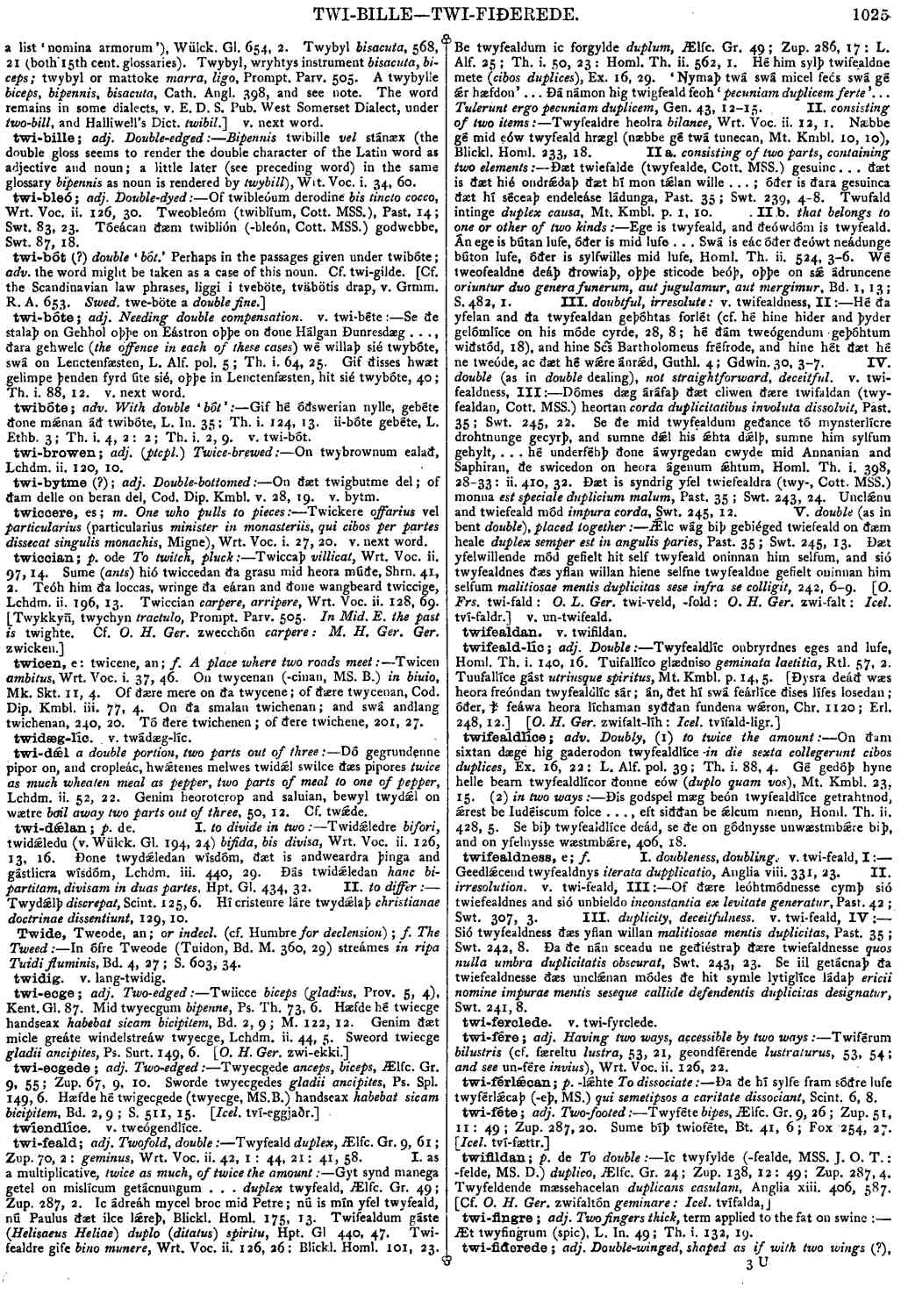
twi-feald
- numeral
- adjective
-
Twyfeald duplex,
- Ælfc. Gr. 9, 61 ;
- Zup. 70, 2 :
geminus
- Wrt. Voc. ii. 42, l : 44, 21: 41, 58.
-
Gyt synd manega getel on mislícum getácnungum . . .twyfeald,
duplex
- Ælfc. Gr. 49 ;
- Zup. 287, 2.
-
Ic ádreáh mycel broc mid Petre; nú is mín yfel twyfeald, nú Paulus ðæt ilce lǽreþ,
- Blickl. Homl. 175, 13.
-
Twifealdum gáste
(Helisaeus Helia) duplo (dilatuj) spiritu
- Hpt. Gl 440, 47.
-
Twi-fealdre gife
bino munere,
- Wrt. Voc. ii. 126, 26:
- Blickl. Homl. 101, 23.
-
Be twyfealdum ic forgylde duplum,
- Ælfc. Gr. 49 ;
- Zup. 286, 17 :
- L. Alf. 25 ;
- Th. i. 50, 23 :
- Homl. Th. ii. 562, l.
-
Hé him sylþ twifealdne mete
(cibos duplices),
- Ex. 16, 29. '
-
Nymaþ twá swá micel fećs swá gé ǽer hæfdon'. . . Ðá námon hig twigfeald feoh
'pecuniam duplicem ferte'. . . Tulerunt ergo pecuniam duplicem,
- Gen. 43, 12-15.
-
Twyfealdre heolra bilance,
- Wrt. Voc. ii. 12, i.
-
Næbbe gé mid eów twyfeald hrægl (næbbe gé twá tunecan, Mt. Kmbl. 10, 10),
- Blickl. Homl. 233, 18.
-
Ðæt twiefalde (twyfealde, Cott. MSS.) gesuinc. . . ðæt is ðæt hié ondrǽdaþ ðæt hí mon tǽlan wille . . . ; óðer is ðara gesuinca ðæt hí séceaþ endeleáse ládunga.
- Past. 35 ;
- Swt. 239, 4-8.
-
Twufald intinge duplex causa.
- Mt. Kmbl. p. I. 10.
-
Ege is twyfeald, and ðeówdóm is twyfeald. Án ege is bútan lufe, óðer is mid lufe. . . Swá is eác óðer ðeówt neádunge búton lufe, óðer is sylfwilles mid lufe,
- Homl. Th. ii. 524, 3-6.
-
Wé tweofealdne deáþ ðrowiaþ, oþþe sticode beóþ, oþþe on sǽ ádruncene
oriuntur duo genera funerum, aut jugulamur, aut mergimur.
- Bd. l, 13 ;
- 8. 482, l.
-
Hé ða yfelan and ða twyfealdan geþóhtas forlét (cf. hé hine hider and þyder gelómlíce on his móde cyrde,28, 8; hé ðám tweógendum geþóhtum wiðstód, 18), and hine S Bartholomeus fréfrode, and hine hét ðæt hé ne tweóde, ac ðæt hé wǽre ánrǽd,
- Guthl. 4 ;
- Gdwin. 30, 3-7.
-
Dómes dæg áráfaþ ðæt cliwen ðære twifaldan (twy-fealdan, Cott. MSS.) heortan
corda duplicitatibus involuta dissolvit
,- Past. 35 ;
- Swt. 245, 22.
-
Se ðe mid twyfealdum geðance tó mynsterlícre drohtnunge gecyrþ, and sumne dǽl his ǽhta dǽlþ, sumne him sylfum gehylt, . . . hé underféhþ ðone áwyrgedan cwyde mid Annanian and Saphiran, ðe swicedon on heora ágenum ǽhtum,
- Homl. Th. i. 398, 28-33 : ii. 410, 32.
-
Ðæt is syndrig yfel twiefealdra (twy-, Cott. MSS.) monna
est speciale duplicium malum,
- Past. 35 ;
- Swt. 243, 24.
-
Unclǽnu and twiefeald mód
impura corda,
- Swt. 245, 12.
-
Ǽlc wág biþ gebiéged twiefeald on ðæm heale
duplex semper est in angulis paries
,- Past. 35 ;
- Swt. 245, 13.
-
Ðæt yfelwillende mód gefielt hit self twyfeald oninnan him selfum, and sió twyfealdnes ðæs yflan willan hiene selfne twyfealdne gefielt ouinnan him selfum
malitiosae mentis duplicitas sese infra se colligit
- 242, 6-9.
Bosworth, Joseph. “twi-feald.” In An Anglo-Saxon Dictionary Online, edited by Thomas Northcote Toller, Christ Sean, and Ondřej Tichy. Prague: Faculty of Arts, Charles University, 2014. https://bosworthtoller.com/31254.
Checked: 2