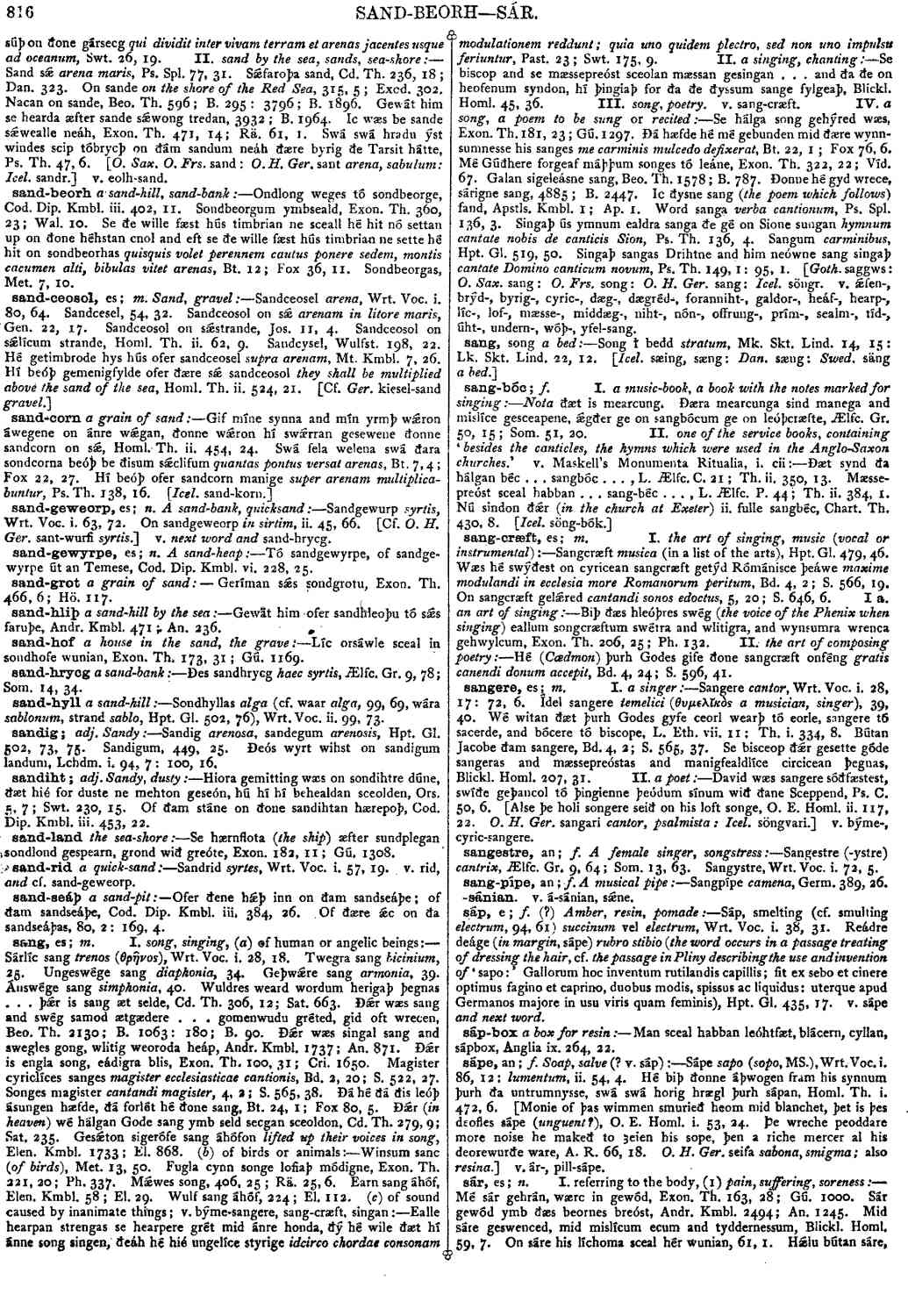
sár
- noun [ neuter ]
-
Mé sár gehrán, wærc in gewód,
- Exon. Th. 163, 28 ;
- Gú. 1000 .
-
Sár gewód ymb ðæs beornes breóst,
- Andr. Kmbl. 2494 ;
- An. 1245 .
-
Mid sáre geswenced, mid mislícum ecum and tyddernessum,
- Blickl. Homl. 59, 7 .
-
On sáre his líchoma sceal hér wunian,
- 61, 1 .
-
Hǽlu bútan sáre,
- Exon. Th. 101, 8 ;
- Cri. 1655 .
-
Ða ðe on sáre seóce lágun,
- 83, 14 ;
- Cri. 1356 .
-
Hé sár ne wiste
he did not feel pain,
- Cd. Th. 12, 3 ;
- Gen. 179 .
-
Nis ðǽr ǽnig sár geméted, ne ádl, ne ece,
- Blickl. Homl. 25, 30 .
-
Hé byð ðæs sáres hál,
- Lchdm. i. 352, 2 .
-
Wið eágena, eárena, sídan, wambe, &c. sáre, i. 2, sqq. On his módor sáre hé biþ ácenned,
- Blickl. Homl. 57, 35 .
-
Ðýlæs hwelc ðara niéhstena ðæs ofslægenan for ðæm sáre ( the mortal wound caused by the slipping of an axe ) hine ofsleá,
- Past. 21 ;
- Swt. 167, 3 .
-
Mugcwyrt ðæt sár ðara fóta of genimþ,
- Lchdm. i. 102, 16 .
-
Gif sió wamb biþ windes full, ðonne cymþ ðæt of wlacre wǽtan; sió cealde wǽte wyrcþ sár an . . . ðonne déþ ðæt ðæt sár áweg,
- Lchdm. ii. 224, 24 .
-
Nǽfre ðú þæs suíðlíc sár gegearwast heardra wíta, ðæt ðú mec onwende worda ðissa,
- Exon. Th. 246, 2 ;
- Jul. 55 .
-
Ðú ðæt sár ( stripes and blows ) áber,
- Andr. Kmbl. 1912 ; ¨
- An. 958 .
-
Ðæt gé him sára gehwylc gehǽlde
that you should heal every wound for him,
- Exon. Th. 144, 11 ;
- Gú. 676 .
-
Leomu hefegodon sárum gesóhte
his limbs waxed heavy, visited by pains,
- 159, 21 ;
- Gú. 930 .
-
Ádle gebysgad,sárum geswenced,
- 170,11 ;
- Gú. 1110 .
-
Ðá wæs heó eft hefigod mid ðǽm ǽrran sárum
prioribus adgravata doloribus,
- Bd. 4, 19;
- S. 589, 5.
-
Se Hǽlend his þegnum sǽde ða sár ðe hé ádreógan wolde,
- Blickl. Homl. 15, 33 .
-
Hié ealle líchomlícu sár oforhogodan,
- 119, 20 .
-
Ne biþ ðǽr sár ne gewinn, ne nǽnig unéþnes,
- Blickl. Homl. 103, 35 .
-
Wépende sár,
- Exon. Th. 79, 14 ;
- Cri. 1290 .
-
Is sáwl mín sáres and yfeles gefylled
repleta est malis anima mea,
- Ps. Th. 87, 3 .
-
Tó tácnunge sorges and ánfealdes sáres,
- Bt. 7, 2 ;
- Fox 18, 21 .
-
Hí hí forlǽtaþ on ðam mǽstan,sáre ,
- 7, 1 ;
- Fox 16,13 .
-
Hé heora helpend wæs on heora sáre,
- Bd. 3,9 ;
- S. 533, 26 .
-
Hit wæs swá gewunelíc on ealdum dagum, ðæt gif hwam sum fǽrlícsár ( affliction ) becóme, ðæt hé his reáf tótǽre,
- Homl. Th. ii. 454, 14 .
-
Ðeáh him mon hwæt wiðerweardes doo, oððe hé hwelce scande gehiére be him selfum, hé æt ðæm cierre ne biþ onstyred . . . ac æfter lytlum fæce hé biþ onǽled mid ðý fýre ðæs sáres,
- Past. 33 ;
- Swt. 225, 20 .
-
Ðá ðæt mód ðillíc sár cweþende wæs,
- Bt. 5, 1 ;
- Fox 8, 24 .
-
Lufu him sára gehwylc symle forswíðede,
- Exon. Th. 160, 4 ;
- Gú. 938: 176, 31 ;
- Gú. 1218 .
-
Æfter ðære menigeo mínra sára ðe mé on ferhþe gestódan
secundum multitudinem dolorum meorum in corde meo,
- Ps. Th. 93, 18 .
-
Ða angunnenan sár
conceptos dolores
,- Wrt. Voc. ii. 136, 12 .
Bosworth, Joseph. “sár.” In An Anglo-Saxon Dictionary Online, edited by Thomas Northcote Toller, Christ Sean, and Ondřej Tichy. Prague: Faculty of Arts, Charles University, 2014. https://bosworthtoller.com/26415.
Checked: 2