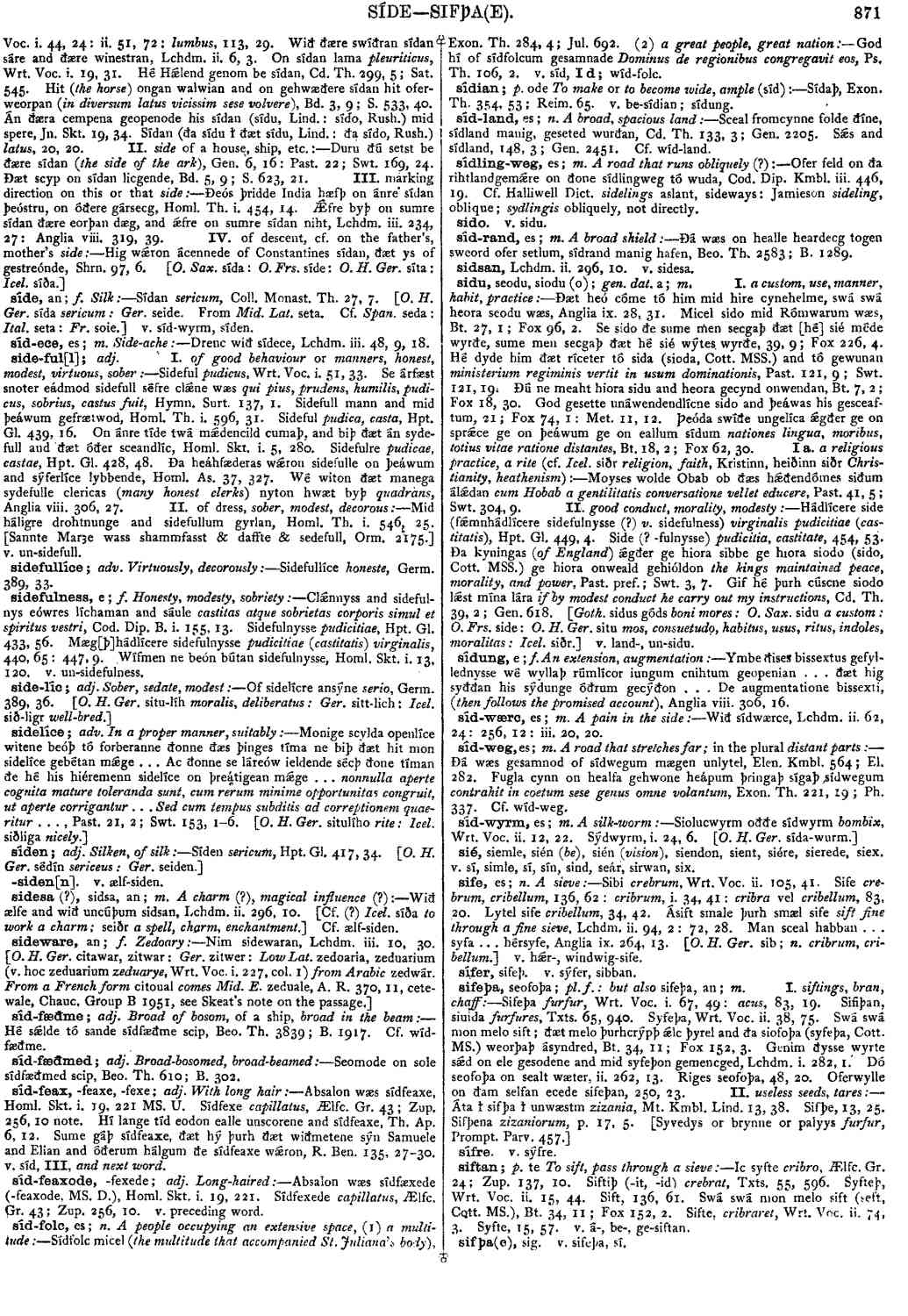
sidu
- noun [ masculine ]
-
Ðæt heó cóme tó him mid hire cynehelme, swá swá heora seodu wæs,
- Anglia ix. 28, 31 .
-
Micel sido mid Rómwarum wæs,
- Bt. 27, 1 ;
- Fox 96, 2 .
-
Se sido ðe sume men secgaþ ðæt [hé] sié méde wyrðe, sume men secgaþ ðæt hé sié wýtes wyrðe,
- 39, 9 ;
- Fox 226, 4 .
-
Hé dyde him ðæt ríceter tó sida (sioda,
- Cott. MSS.
ministerium regiminis vertit in usum dominationis,
- Past. 121, 9 ;
- Swt. 121, 19 ;
-
Ðú ne meaht hiora sidu and heora gecynd onwendan
- Bt. 7, 2 ;
- Fox 18, 30 .
-
God gesette unáwendendlícne sido and þeáwas his gesceaftum,
- 21 ;
- Fox 74, 1 :
- Met. 11, 12 .
-
Þeóda swíðe ungelíca ǽgðer ge on sprǽce ge on þeáwum ge on eallum sídum
nationes lingua, moribus, totius vitae ratione distantes,
- Bt. 18, 2 ;
- Fox 62, 30 .
-
Moyses wolde Obab ob ðæs hǽðendómes siðum álǽdan
cum Hobab a gentilitatis conversatione vellet educere,
- Past. 41, 5 ;
- Swt. 304, 9 .
-
Hádlícere side
(fǽmnhádlícere sidefulnysse (?) v. sidefulness)virginalis pudicitiae (castitatis),
- Hpt. Gl. 449, 4 .
-
Side (? -fulnysse)
pudicitia, castitate,
- 454, 53 .
-
Ða kyningas (of England) ǽgðer ge hiora sibbe ge hiora siodo (sido,
- Cott. MSS.
the kings maintained peace, morality, and power,
- Past. pref. ;
- Swt. 3, 7 .
-
Gif hé þurh cúscne siodo lǽst mína lára
if by modest conduct he carry out my instructions,
- Cd. Th. 39, 2 ;
- Gen. 618 .
Bosworth, Joseph. “sidu.” In An Anglo-Saxon Dictionary Online, edited by Thomas Northcote Toller, Christ Sean, and Ondřej Tichy. Prague: Faculty of Arts, Charles University, 2014. https://bosworthtoller.com/27640.
Checked: 2