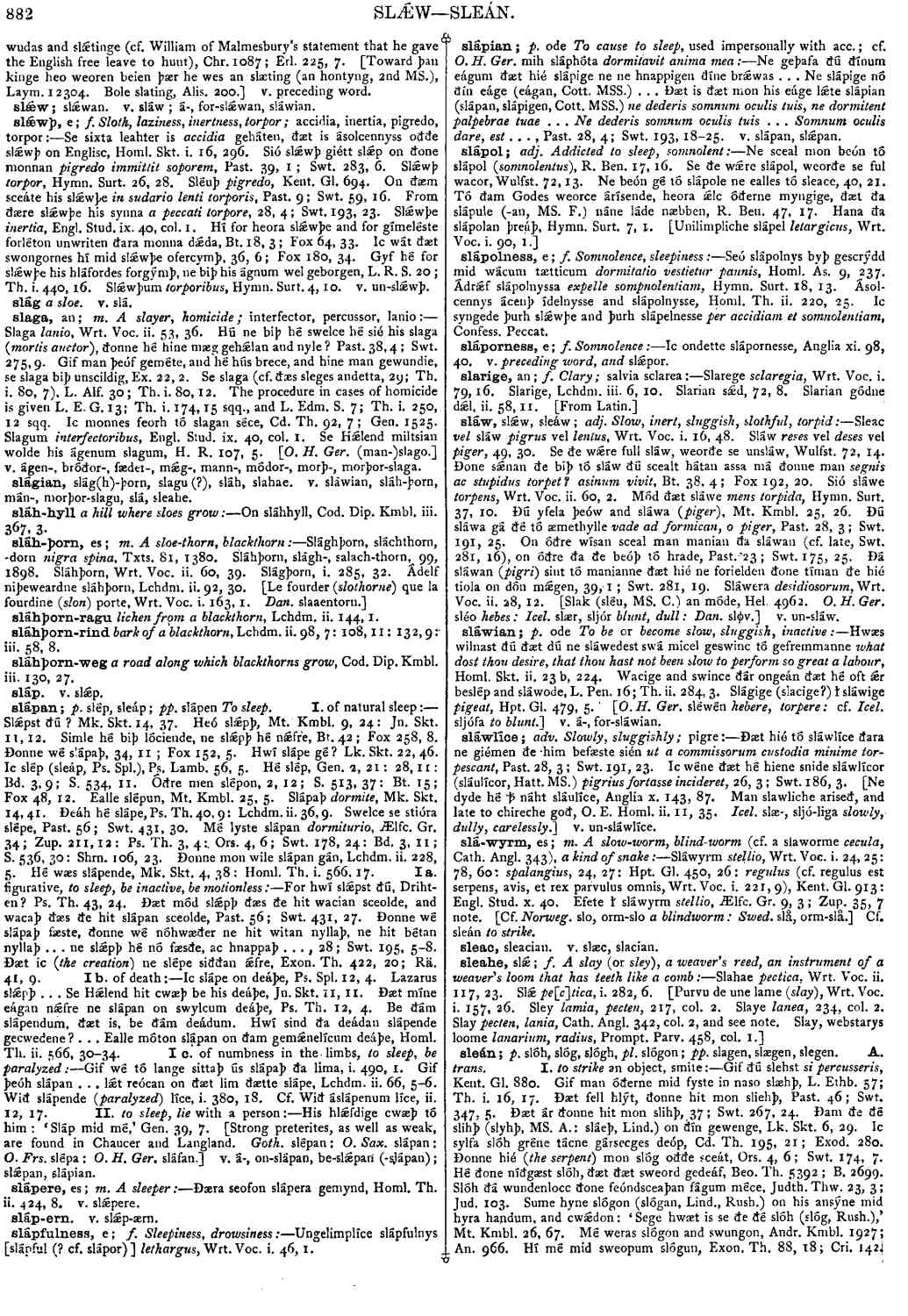
sleán
- verb [ strongcontracted ]
-
Gif ðú slehst
si percusseris,
- Kent. Gl. 880 .
-
Gif man óðerne mid fyste in naso slæhþ,
- L. Ethb. 57 ;
- Th. i. 16, 17 .
-
Ðæt fell hlýt, ðonne hit mon sliehþ,
- Past. 46 ;
- Swt. 347, 5 .
-
Ðæt ár ðonne hit mon slihþ,
- 37 ;
- Swt. 267, 24 .
-
Ðám ðe ðé slihþ (slyhþ,
- MS. A.
- Lind.
- Lk. Skt. 6, 29 .
-
Ic sylfa slóh gréne tácne gársecges deóp,
- Cd. Th. 195, 21 ;
- Exod. 280 .
-
Ðonne hié (the serpent) mon slog oððe sceát,
- Ors. 4, 6 ;
- Swt. 174, 7 .
-
Hé ðone níðgæst slóh, ðæt ðæt sweord gedeáf,
- Beo. Th. 5392 ;
- B. 2699 .
-
Slóh ðá wundenlocc ðone feóndsceaþan fágum méce,
- Judth. Thw. 23, 3 ;
- Jud. 103 .
-
Sume hyne slógon (slogan.
- Lind.
- Rush.
- Rush.
- Mt. Kmbl. 26, 67 ,
-
Me weras slógon and swungon,
- Andr. Kmbl. 1927 ;
- An. 966 .
-
Hí mé mid sweopum slógun,
- Exon. Th. 88, 18 ;
- Cri. 142 .
-
Ne sleá gé nánne
neminem concutiatis,
- Lk. Skt. 3, 14 .
-
Sleáþ synnigne ofer seolfes múþ,
- Andr. Kmbl. 2601 ;
- An. 1302 .
-
Se ðe sleá (percusserit) his fæder oððe his móder swelte hé deáþe,
- Ex. 21, 15 .
-
Gehýrde ic ðæt Eádweard ánne slóge swíðe mid his swurde,
- Byrht. Th. 135, 13 ;
- By. 117 .
-
Ðá beáh hé sleánde his breóst,
- H. R. 107, 11 .
-
Áhsa hwæðer hé ǽfre wǽre slegen on ða sídan.
- Lchdm. ii. 258, 23 .
-
Biþ slaegen
percellitur,
- Wrt. Voc. ii. 117, 3 .
-
An slægenre
in pacte,
- 48, 77 .
-
Wæs ðæs feós ofergewrit ðæs ylcan mynetsleges ðe man ðæt feoh on slóh, sóna ðæs forman geáres ðá Decius féng tó ríce.
- Homl. Skt. i. 23, 476 .
-
Ælc mynetere ðe man tíhþ ðæt fals feoh slóge.
- L. Eth. iii. 8 ;
- Th. i. 296, 12 .
-
Godes feoh biþ befæst myneterum tó sleánne,
- Homl. Th. ii. 554, 14 .
-
Sæt smiþ, slóh seax.
- Lchdm. iii. 52, 27 .
-
Gif næddre sleá man,
- Lchdm. ii. no, 14 .
-
Slés ðú
occideris,
- Ps. Surt. 138, 19 .
-
Hé sléþ
occideret,
- 77, 34 .
-
Mann slihþ ðínne oxan
bos tuus immoletur.
- Deut. 28, 31 .
-
Ic slóg niceras,
- Beo. Th. 847 ;
- 6. 421 :
- Exon. Th. 272, 4 ;
- Jul. 494 .
-
Ðonne God hié slóg (occideret), ðonne sóhton hié hine,
- Past. 36, 3 ;
- Swt. 251, 20 :
- Beo. Th. 217 ;
- B. 108 .
-
Slógh,
- Bd. 3, 9 ;
- S. 533, 14 .
-
Hé slóh and fylde feond,
- Cd. Th. 124, 32 ;
- Gen. 2071 .
-
Se hagol slóh ealle ða þing ðe úte wǽron, ǽgðer ge men ge nýtenu.
- Ex. 9, 25 .
-
Slógon
obruerunt,
- Wrt. Voc. ii. 65, 20 .
-
Abraham ne sleah ðín bearn,
- Cd. Th. 176, 18 ;
- Gen. 2913 .
-
Sleh,
- 204, 12 ;
- Exod. 418 .
-
Sleá man ðone leásan wítegan
propheta Hie interficietur,
- Deut. 13, 5 .
-
Ðás folc sleán mid cwealmþreá,
- Cd. Th. 151, 10 ;
- Gen. 2506 .
-
Se eorl wolde sleán eaferan sínne,
- 203, 30 ;
- Exod. 411 .
-
On deáþ sleán (cf.
- 76, 34 ;
- Gen. 1267 .
-
Hé biþ . . . tó sleánne oðde tó álýsenne,
- L. Wih. 28 ;
- Th. i. 42, 25 .
-
Hié wǽron ða wǽpnedmen sleánde,
- Ors. l, 10 ;
- Swt. 48, 6 .
-
Wæs Fin slægen,
- Beo. Th. 2309 ;
- B. 1152 .
-
Sacerdas wǽron slægene,
- Bd. 1, 15 ;
- S. 484, 1 .
-
Ða hǽþenan wǽron slægne,
- 3, 24 ;
- S. 556, 29 .
-
Ðá arn sum þeng and slóh tácen æt ðam gæte
cucurrit minister, et pulsans ad ostium,
- Bd. 3, 11 ;
- S. 536, 17 .
-
Hé tácen mid his handa slóh
sonitum manu faciens,
- 4, 3 ;
- S. 568, 6 .
-
Men tácen slógon,
- Guthl. 11 ;
- Gdwin. 54, 24 :
- 12 ;
- Gdwin. 58, 23 .
-
Sleah feówer scearpan,
- Lchdm. ii. 100, 3 :
- 142, 18 .
-
Sleá him ánne spearcan,
- 290, 17 .
-
Hig slógon heora wedd ǽgðer tó óðrum,
- Gen. 21, 27 .
-
Hé slóh fýr on feóndas
he drove the fire on to the foes,
- Cd. Th. 237, 28 ;
- Dan. 344 .
-
Ic wéne gif wit uncre word tósomne sleáþ, ðæt ðǽr ásprunge sum spearca sóþfæstnesse,
- Bt. 35, 5 ;
- Fox 164, 2 .
-
Iacob slóh his geteld on ðæré dúne,
- Gen. 31, 25 .
-
Sleah ǽnne stacan onmiddan ðam ymb-hagan,
- Lchdm. i. 395, 4 .
-
Ða hét Moises sleán án geteld bútan hira wícstówe,
- Ex. 33, 7 :
- Homl. Th. ii. 242, 8 .
-
Ða stówa ðe gé eówre geteld on sleán sceoldon,
- Deut. i. 33 .
-
Hió sceolde ða men weorpan an wildedeóra líc and siððan sleán on ða raccentan and on copsas.
- Bt. 38, 1 ;
- Fox 194, 32 .
-
Hí slógon him of ðæt heáfod,
- Th. An. 122, 23 .
-
Sleá mon hond of oððe fót,
- L. In. 18 ;
- Th. i. 114, 7 :
- 37 ;
- Th. i. 124, 23 .
-
Ic ástrecce mine hand and sleá Egipta land on eallum minum wundrum.
- Ex. 3, 20 .
-
Sliét
concidet (cervices peccatorum),
- Blickl. Gl .
-
Hí mid ðý wíte ðæs foresprecenan wræces slægene wǽron
praefatae ultionis sunt poena multati,
- Bd. 4, 25 ;
- S. 601, 31 .
-
Hé yrringa slóh
in anger he struck,
- Beo. Th. 3135 ;
- B. 1565 :
- 5350 ;
- B. 2679 .
-
On ðone eádgan andwlitan men hondum slógun,
- Exon. Th. 69, 22 ;
- Cri. 1124 .
-
Ðæt hé mé ongeán sleá,
- Beo. Th. 1367 ;
- B. 681 .
-
Hé sulh heóld and on íren slóh and corn ðærsc and windwode.
- Shrn. 61, 18 .
-
Ne sleah ðú,
- L. Alf. 5 ;
- Th. i. 44, 17 .
-
Slyh (sleh, MS. A.),
- Mk. Skt. 10, 19 .
-
Þeóf ne cymþ búton ðæt hé stele and sleá,
- Jn. Skt. 10, 10 .
-
Hié wǽron ða burg hergende and sleánde,
- Ors. 2, 8 ;
- Swt. 92, 16 .
-
Gesca sláet
singultat
(cf.- Wrt. Voc. ii. 120, 50 .
-
Ðǽr seolesburna sliht on meóne.
- Cod. Dip. Kmbl. iii. 13, 31 .
-
Ðeáh swín beswemde weorþon, ðonne sleáþ hé eft on ða solu.
- Bt. 37, 4 ;
- Fox 192, 28 .
-
Hé on scip ástáh and slóh út on ða sǽ
put to sea,
- Ap. Th. 6, 6 .
-
Se lég slóh tó leofonum,
- Shrn. 73, 36 .
-
Ðá slóh ðǽr micel mist
a great mist came on suddenly.
- Gen. 15, 17 .
-
Seó sǽ slóh tógædere
occurrerunt aquae,
- Ex. 14, 27 .
-
Hé ofdrǽd slóh ádún ðǽrrihte
terrified he straightway fell down as if struck
(cf.- Homl. Skt. i. 23, 718 .
-
Ðá slóh ðǽr micel leóht fit æfter ðam englum
(cf.- Homl. Th. ii. 342, 7 ;
- 350, 24 .
-
On slógan
incursere,
- Wrt. Voc. ii. 48, 1 .
-
Drenc wið deádum swile ðæt hé út sleá,
- Lchdm. ii. 74, 18 :
- 102, 20 .
-
Ðý læs hit in sleá,
- 324, 3 .
-
Gif hié út sleán
if they (pocks) break out,
- 106, 4 .
Bosworth, Joseph. “sleán.” In An Anglo-Saxon Dictionary Online, edited by Thomas Northcote Toller, Christ Sean, and Ondřej Tichy. Prague: Faculty of Arts, Charles University, 2014. https://bosworthtoller.com/27976.
Checked: 2