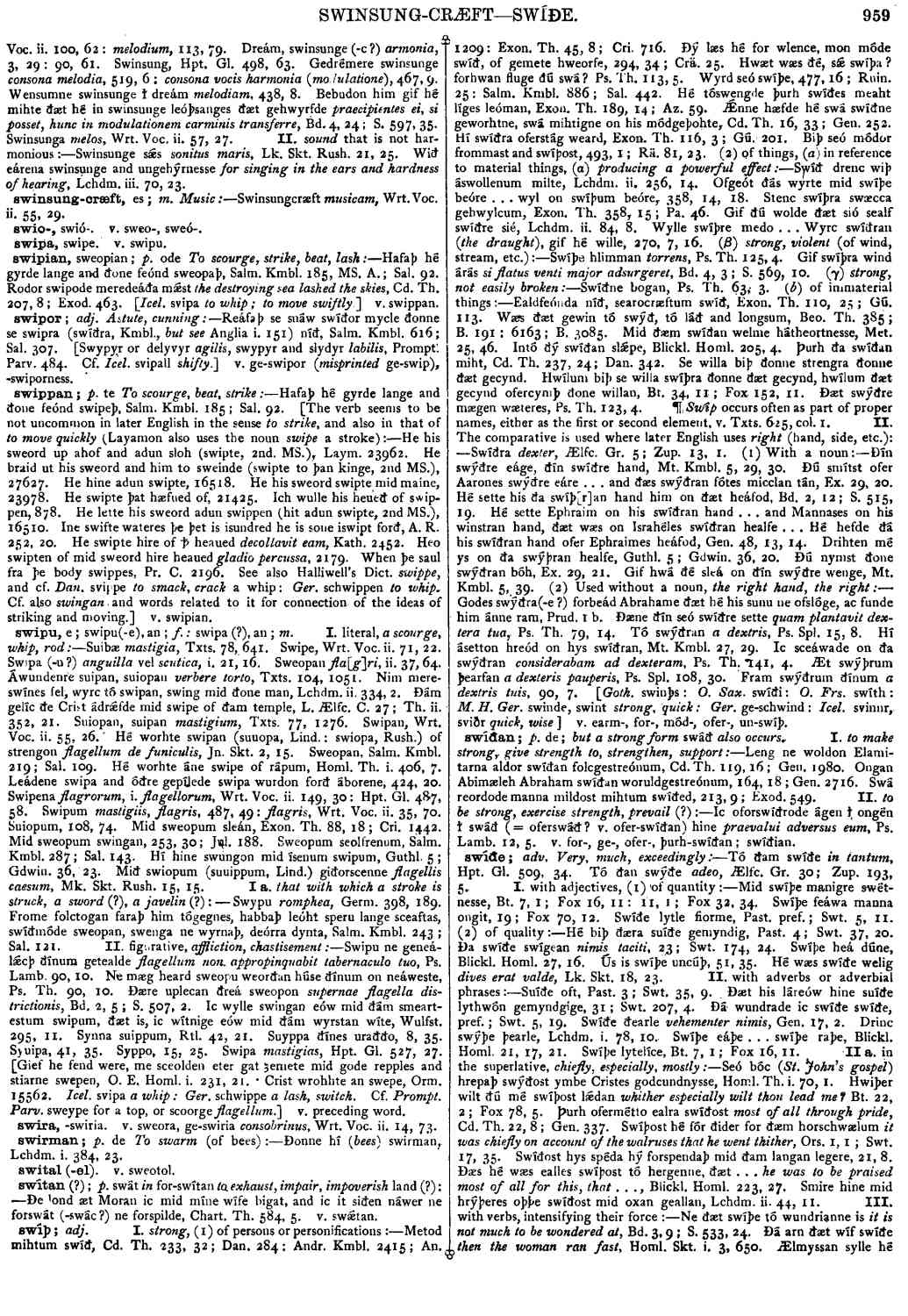
swíðe
- adverb
-
Tó ðam swíðe
in tantum,
- Hpt. Gl. 509, 34.
-
Tó ðan swýðe
adeo,
- Ælfc. Gr. 30 ;
- Zup. 193, 5.
-
Mid swíþe manigre swétnesse,
- Bt. 7, 1 ;
- Fox 16, 11: 11, 1 ;
- Fox 32, 34.
-
Swíþe feáwa manna ongit,
- 19 ;
- Fox 70, 12.
-
Swíþe lytle fiorme,
- Past. pref. ;
- Swt. 5, 11.
-
Hé biþ ðæra suíðe gemyndig,
- Past. 4 ;
- Swt. 37, 20.
-
Ða swíðe swígean
nimis taciti,
- 23 ;
- Swt. 174, 24.
-
Swíþe heá dúne,
- Blickl. Homl. 27, 16.
-
Ús is swíþe uncúþ,
- 51, 35.
-
Hé wæs swíðe welig
dives erat valde,
- Lk. Skt. 18, 23.
-
Suíðe oft,
- Past. 3 ;
- Swt. 35, 9.
-
Ðæt his láreów hine suíðe lythwón gemyndgige,
- 31 ;
- Swt. 207, 4.
-
Ðá wundrade ic swíðe swíðe,
- pref. ;
- Swt. 5, 19.
-
Swíðe ðearle
vehementer nimis,
- Gen. 17, 2.
-
Drinc swýþe þearle,
- Lchdm. i. 78, 10.
-
Swíþe eáþe . . . swíþe raþe,
- Blickl. Homl. 21, 17, 21.
-
Swíþe lytelíce,
- Bt. 7, 1 ;
- Fox 16, 11.
-
Seó bóc (St. John's gospel ) hrepaþ swýðost ymbe Cristes godcundnysse,
- Homl. Th. i. 70, 1.
-
Hwiþer wilt ðú mé swíþost lǽdan
whither especially wilt thou lead me?
- Bt. 22, 2 ;
- Fox 78, 5.
-
Þurh ofermétto ealra swíðost
most of all through pride,
- Cd. Th. 22, 8 ;
- Gen. 337.
-
Swíþost hé fór ðider for ðæm horschwælum
it was chiefly on account of the walruses that he went thither,
- Ors. 1, 1 ;
- Swt. 17, 35.
-
Swíðost hys spéda hý forspendaþ mid ðam langan legere,
- 21, 8.
-
Ðæs hé wæs ealles swíþost to hergenne, ðæt . . .
he was to be praised most of all for this, that. . . ,
- Blickl. Homl. 223, 27.
-
Smire hine mid hrýþeres oþþe swíðost mid oxan geallan,
- Lchdm. ii. 44, 11.
-
Ne ðæt swíþe tó wundrianne is
it is not much to be wondered at,
- Bd. 3, 9 ;
- S. 533, 24.
-
Ðá arn dæt wíf swíðe
then the woman ran fast,
- Homl. Skt. i. 3, 650.
-
Ælmyssan sylle héswýðe
eleemosynas reddat largiter,
- L. Ecg. C. 3 ;
- Th. ii. 136, 34.
-
Þicge hit swýðe,
- Lchdm. i. 80, 19.
-
Seóð swýþe and ete swýþe
cook thoroughly and eat largely,
- 82, 1.
-
Ðæt Drihten swóre áð swíðe
solemnly swore an oath,
- Wulfst. 209, 27.
-
Ðæt wé his tó suíðe ne gítseden,
- Past. 3 ;
- Swt. 33, 18.
-
Drihten is þearle swíþe tó herienne,
- Lchdm. iii. 436, 18.
-
Hé þearle swíþe wearþ gegladod,
- 438, 27.
-
Swá swýþe swá hé ðam cyninge wæs líciende, swá swýþe hé him sylfum mislícade,
- Bd. 5, 13 ;
- S. 632, 8.
-
Mé swá swýþe ne lyst, swá . . . ,
- Bt. 5, 1 ;
- Fox 10, 18.
-
Hí swíþor clypodon
illi magis clamabant,
- Mt. Kmbl. 27, 23.
-
Nis ðé náuht swíþor
nothing affects you more,
- Bt. 7, 1 ;
- Fox 16, 8: 7, tit. ;
- Fox x, 13.
-
Wé nellaþ be ðám ná swíðor áwrítan
we will not write further about them,
- Homl. Th. ii. 466, 20.
-
Wé willaþ furðor ymbe ðás emnihte swíðor sprecan . . . Embe ðis wé sprecaþ eft swídor
we will say more about it later on,
- Lchdm. iii. 240, 1, 7.
-
Ða bróþra óþra weorca swýðor gýmdon
paid more attention to other works,
- Bd. 3, 8 ;
- ii. 532, 30.
-
Swá hé him swíþor bebeád swá hí swíðor bodedon
quanto eis praecipiebat, tanto magis plus praedicabant,
- Mk. Skt. 7, 36.
-
Wæs hé swá micle swíðor on his móde gedréfed, swá his mód ǽr swíðor tó ðám woruld*-*sǽlþum gewunod wæs,
- Bt. 1 ;
- Fox 2, 27.
-
Biþ ðý heardra ðe hit sǽ*-*streámas swíðor beátaþ,
- Cd. Th. 80, 10 ;
- Gen. 1326.
-
Ðǽm módum ðe hí willaþ swíþost beswícan
the minds that they will most completely dtceive,
- Bt. 7, 1 ;
- Fox 16, 12.
-
Ðá hé hí swíðost forslagen hæfde
when he had inflicted a most severe defeat upon them,
- 16, 2 ;
- Fox 54, 2.
-
Ðá hí swíðost worhton
when they were working hardest,
- Homl. Th. i. 22, 22.
-
Ðonne heó bléwþ swíðust
when it is in fullest blossom,
- Lchdm. i. 160, 14.
-
Forlǽtan unnytte ymbhogan swá hé swíþost mihte
as much as ever he could,
- Bt. 35, tit. ;
- Fox xvi, 27.
-
Hiora scamiaþ swíþust ealles ða tó Sione hete swíðost hæfdon,
- Ps. Th. 128, 3.
-
Swýþust ealra,
- 108, 28.
-
Næfde se here Angelcynn ealles for swíðe gebrocod; ac hié wǽron micle swíþor gebrocede mid ceápes cwilde and monna; ealles swíþost mid ðæm ðæt manige ðara sélestena cynges þéna forðférdon,
- Chr. 897 ;
- Erl. 94, 29-32.
Bosworth, Joseph. “swíðe.” In An Anglo-Saxon Dictionary Online, edited by Thomas Northcote Toller, Christ Sean, and Ondřej Tichy. Prague: Faculty of Arts, Charles University, 2014. https://bosworthtoller.com/29853.
Checked: 2